
Parshwanath Vidyapeeth
PRAKRIT WORD OF THE DAY
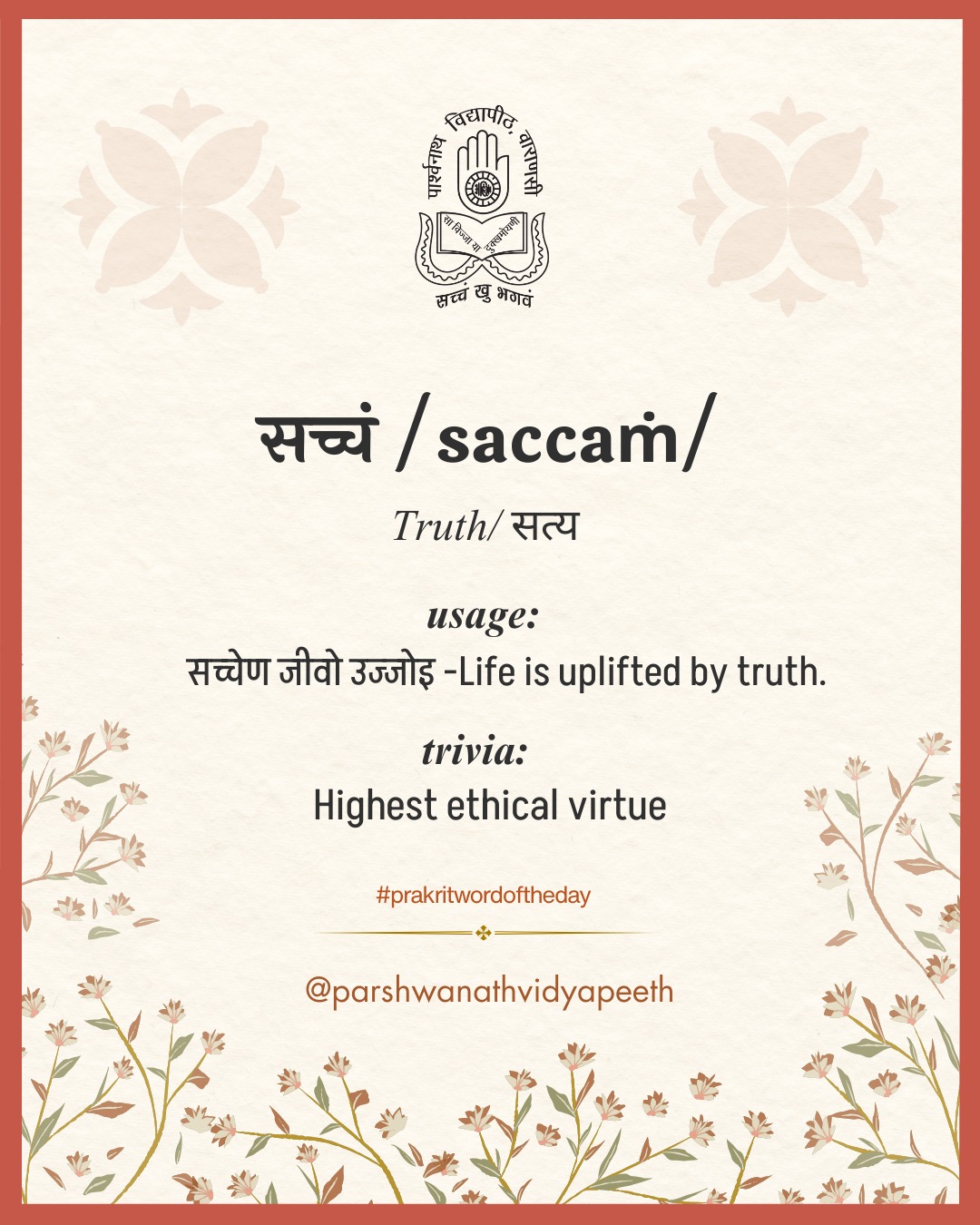
In Jain philosophy, truth is not merely a spoken virtue; it is a way of living.
“सच्चेण जीवो उज्जोइ” reminds us that when our thoughts, words, and actions are aligned with honesty, life is illumined with clarity, compassion, and inner strength.
May this timeless wisdom inspire us to walk the path of sincerity every day.
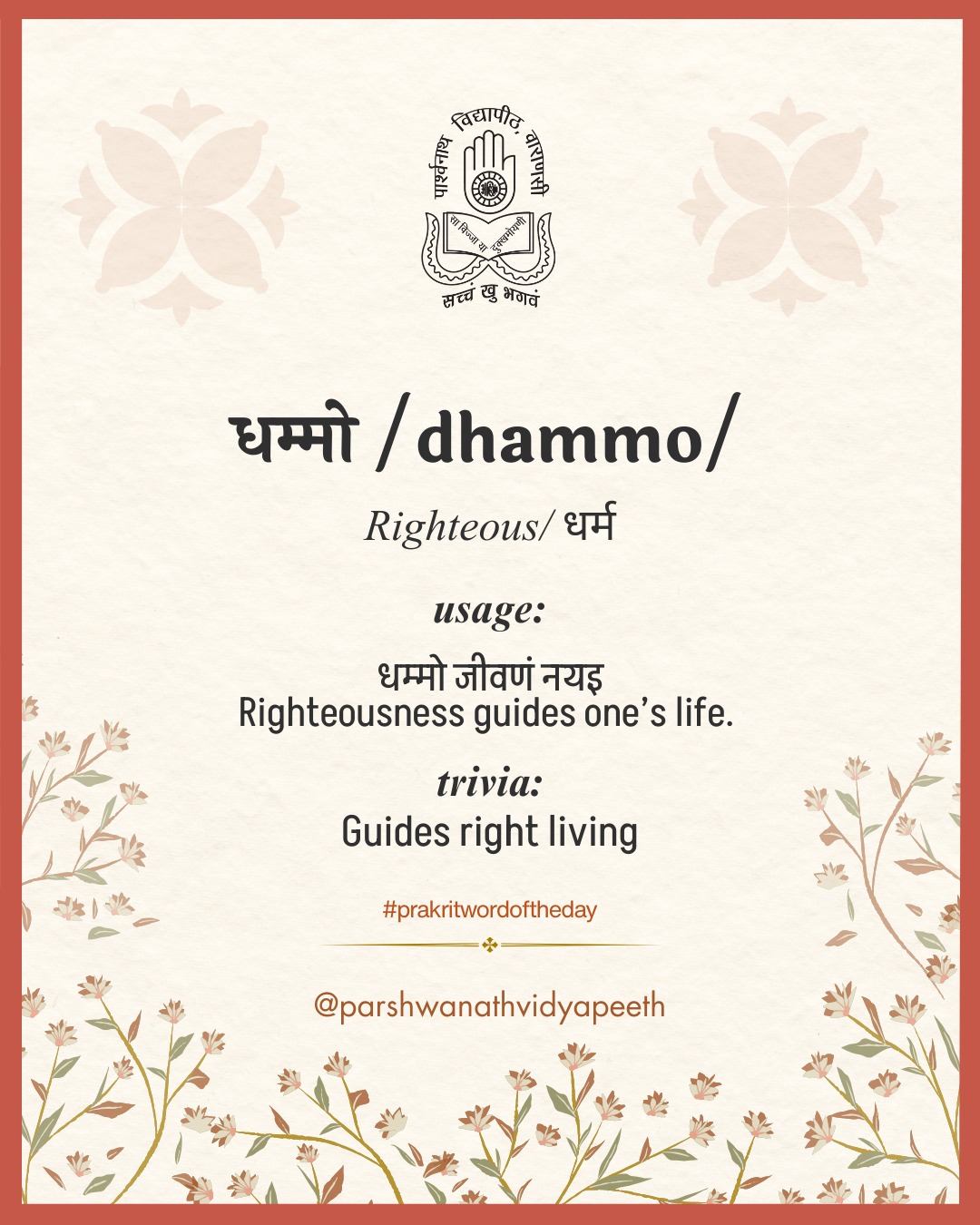
In Jain thought, धम्मो is not just belief, but conscious living—choosing what is right in thought, speech, and action.
“धम्मो जीवणं नयइ” reminds us that when life is rooted in righteousness, it naturally moves toward balance, discipline, and inner peace. May this ancient wisdom inspire us to walk the path of right conduct every day.
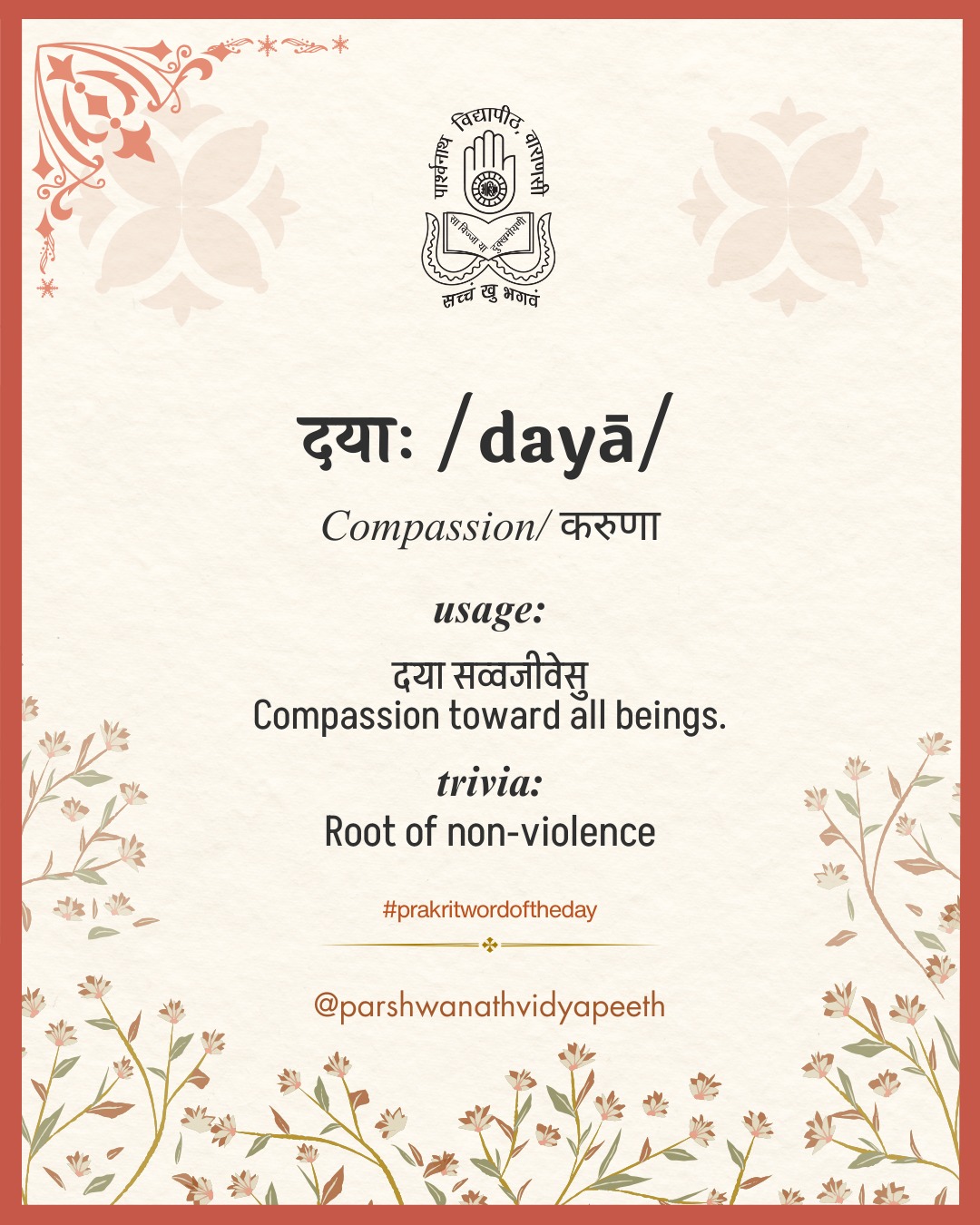
In Jain philosophy, compassion means recognizing the pain of others and responding with care, restraint, and empathy in thought, speech, and action.
When life is guided by दया, non-violence becomes natural, and harmony follows.
May this gentle virtue shape our conduct every day.
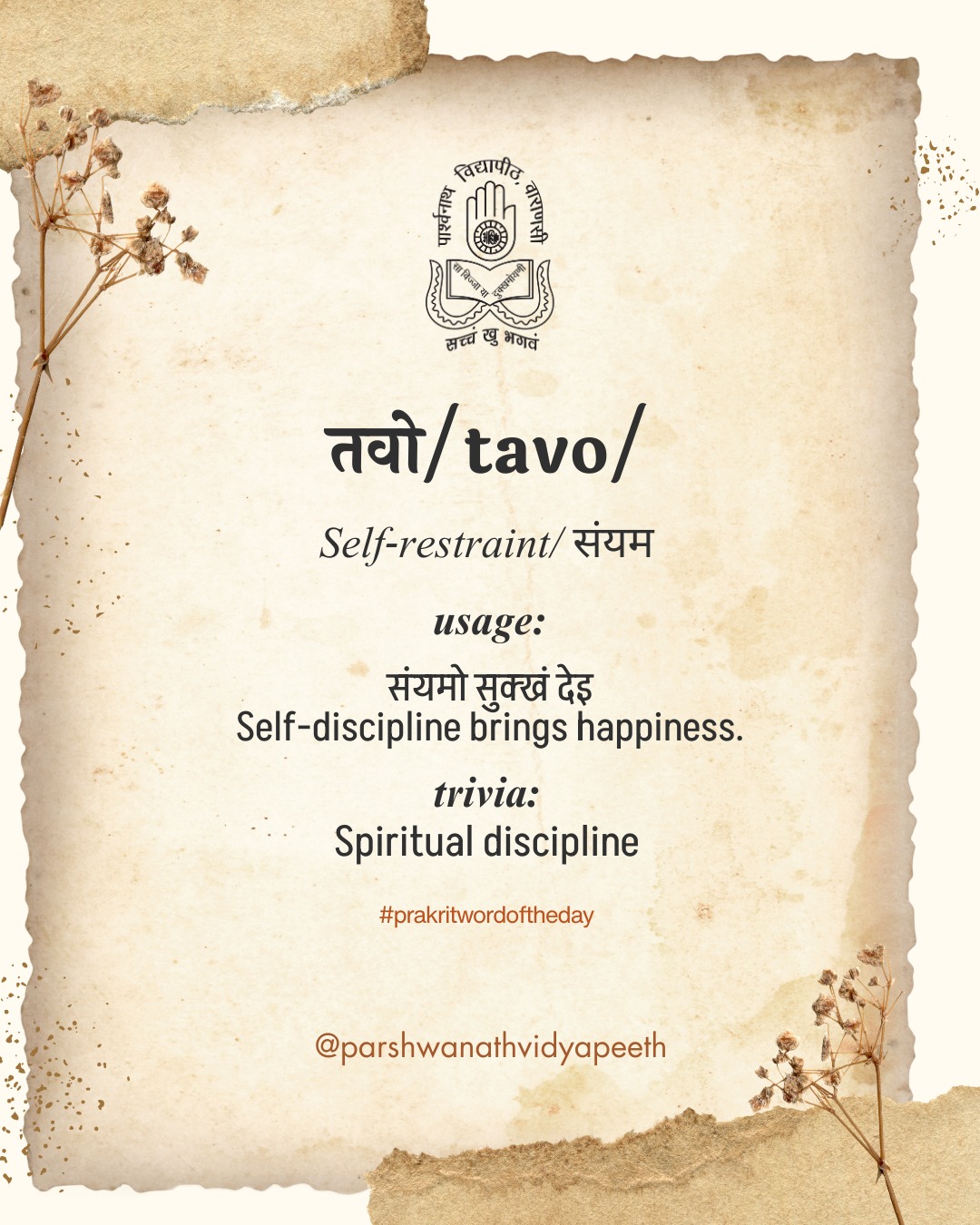
Trivia: In Jain philosophy, tavo (तवो) signifies disciplined austerity undertaken for spiritual purification. It is through sincere tapas that accumulated karmas are weakened and ultimately destroyed.
तवो (tavo) = Austerity / Spiritual discipline
In Jain thought, austerity is not mere hardship—it is conscious self-restraint and inner refinement. It purifies the soul, reduces karmic bondage, and strengthens self-mastery.
“तवेण कम्मं खिज्जइ” reminds us that through sincere penance and discipline, the soul gradually frees itself from karmic impurities and moves closer to liberation.
May the spirit of tavo inspire self-discipline, inner strength, and spiritual elevation.
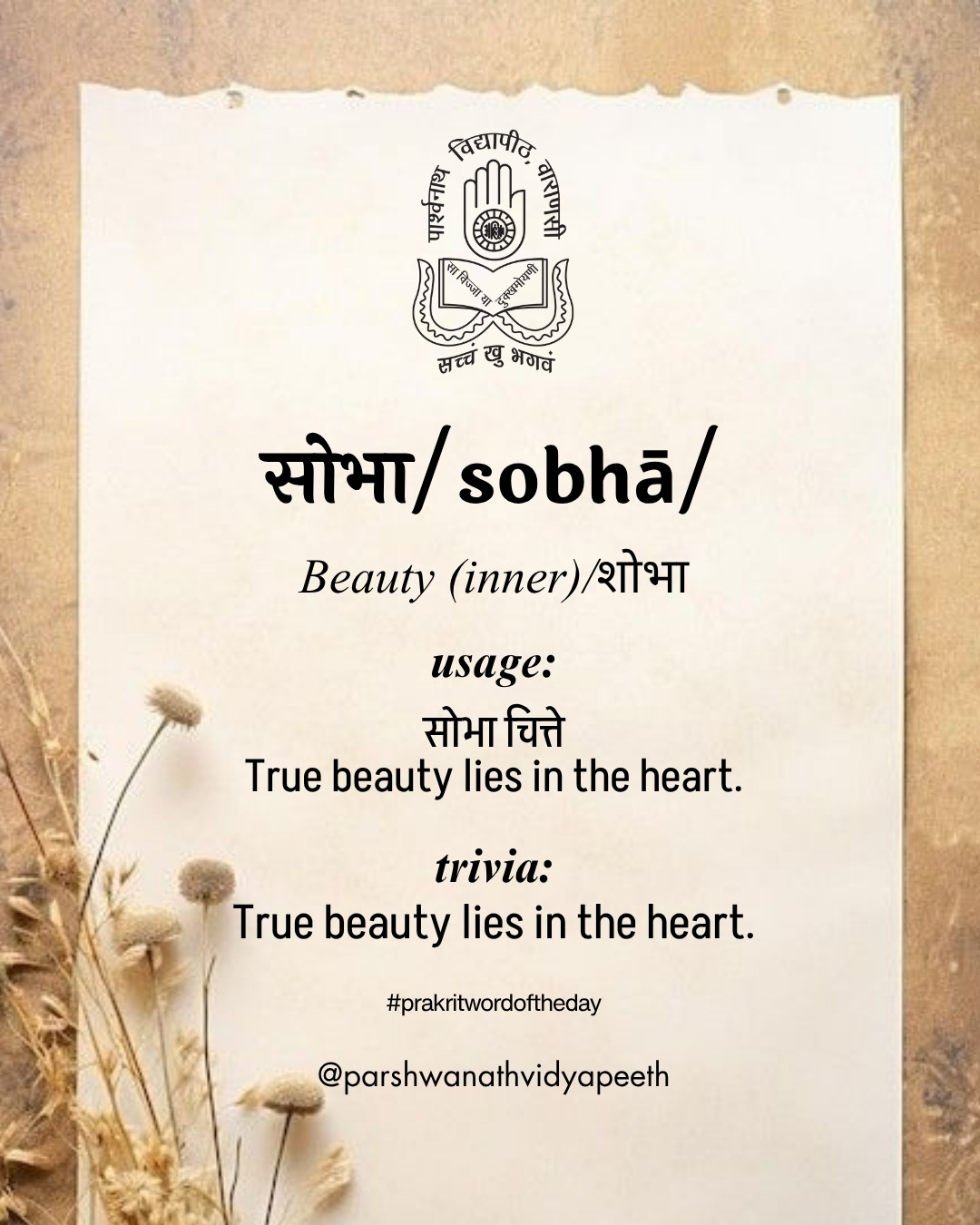
सोभा (sobhā) = The radiance of a pure heart and noble character.
The phrase “सोभा चित्ते” reminds us that genuine beauty lives within the heart. External beauty may fade with time, but the beauty of wisdom, goodness, and compassion remains eternal. A peaceful mind and caring nature make a person truly beautiful in the eyes of the world.
In Jain philosophy, inner beauty is connected with simplicity, truthfulness, non-violence, and selflessness. When thoughts are pure and actions are righteous, one naturally spreads positivity and harmony everywhere. Such beauty inspires trust, warmth, and spiritual growth in society.
A beautiful heart speaks through gentle words, honest actions, and compassion toward every living being. Real beauty is the light of goodness that shines from within and uplifts others around us.
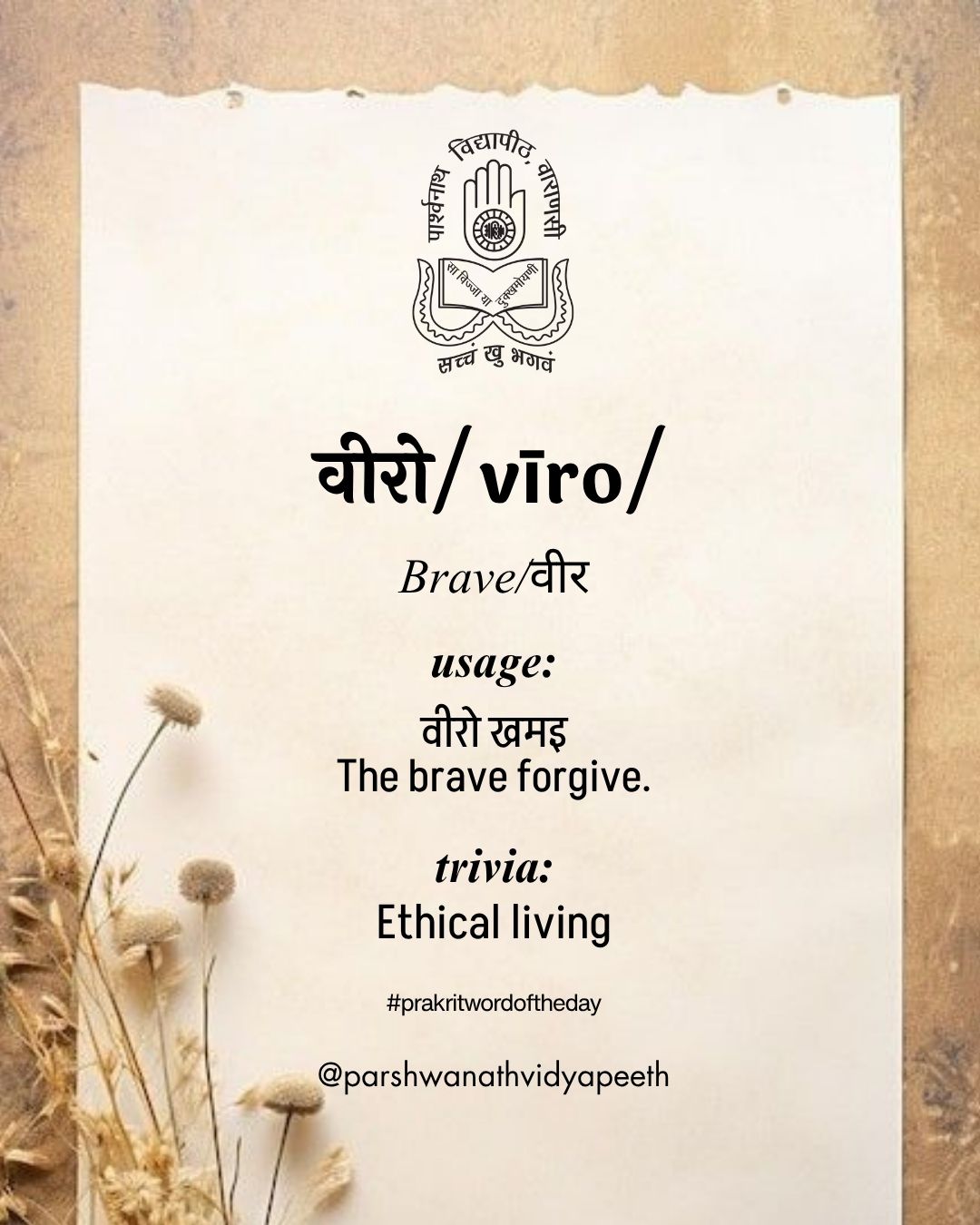
In Prakrit philosophy, the word “वीरो” (vīro) symbolizes true bravery — not just physical strength, but the courage to practice forgiveness, patience, and compassion. A truly brave person rises above anger, ego, and revenge, choosing understanding and kindness even in difficult situations. Real heroism is found in self-control and moral strength.
वीरो (vīro) = One who lives with courage, forgiveness, and inner strength.
The phrase “वीरो खमइ” teaches that forgiveness is a sign of greatness. It takes strength to let go of hatred and respond with wisdom instead of anger. In Jain philosophy, forgiveness is considered one of the highest virtues because it brings peace within oneself and harmony with others.
May the spirit of vīro inspire you to practice courage, forgiveness, and compassion in everyday life.
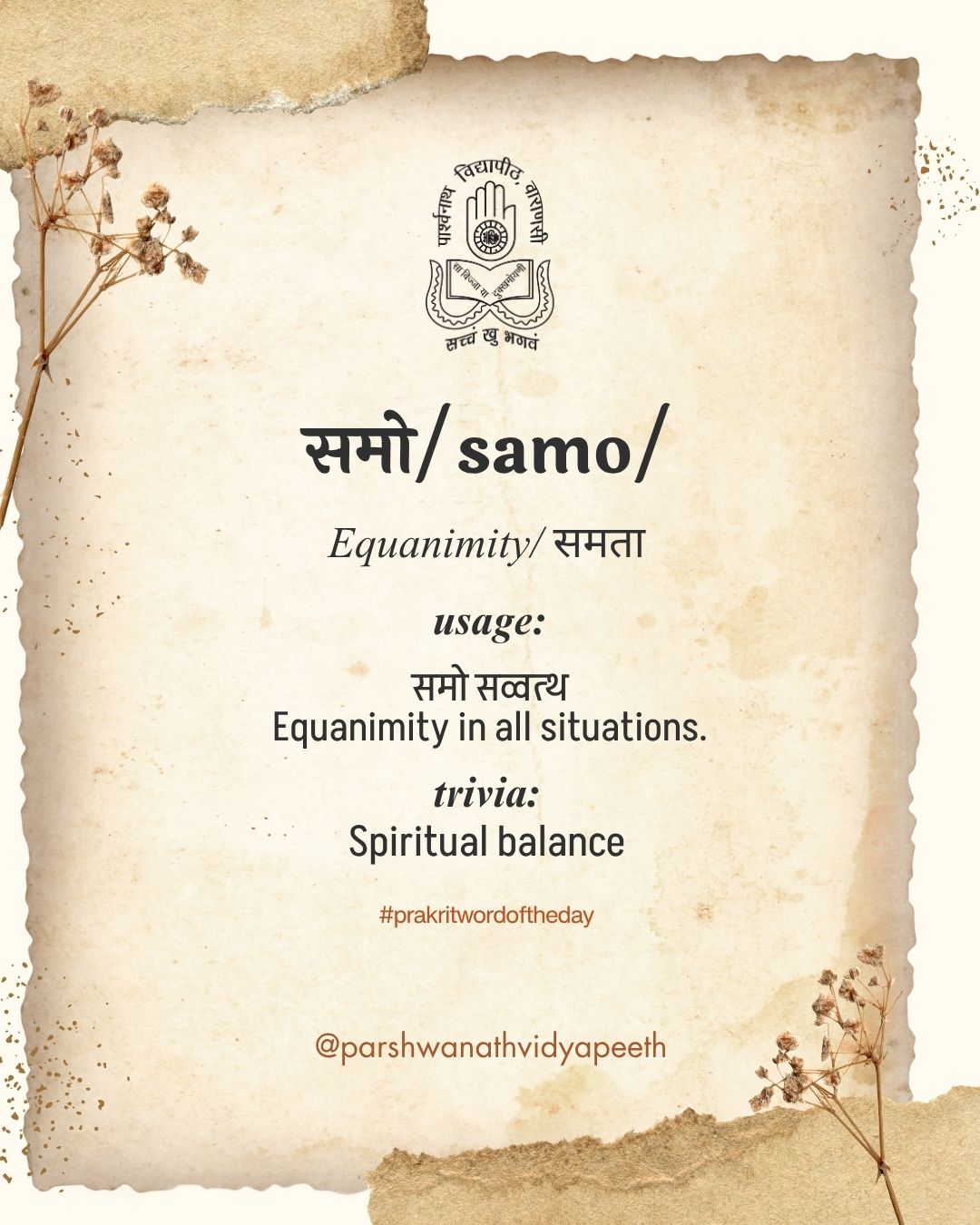
In Jain thought, equanimity is not indifference—it is conscious awareness without attachment or aversion. A person established in samo responds with clarity rather than reaction, maintaining harmony within.
“समो सव्वत्थ” reminds us to cultivate calmness and balance in every circumstance, seeing all experiences with a steady and unbiased mind.
May the spirit of samo guide us toward inner peace, stability, and liberation.
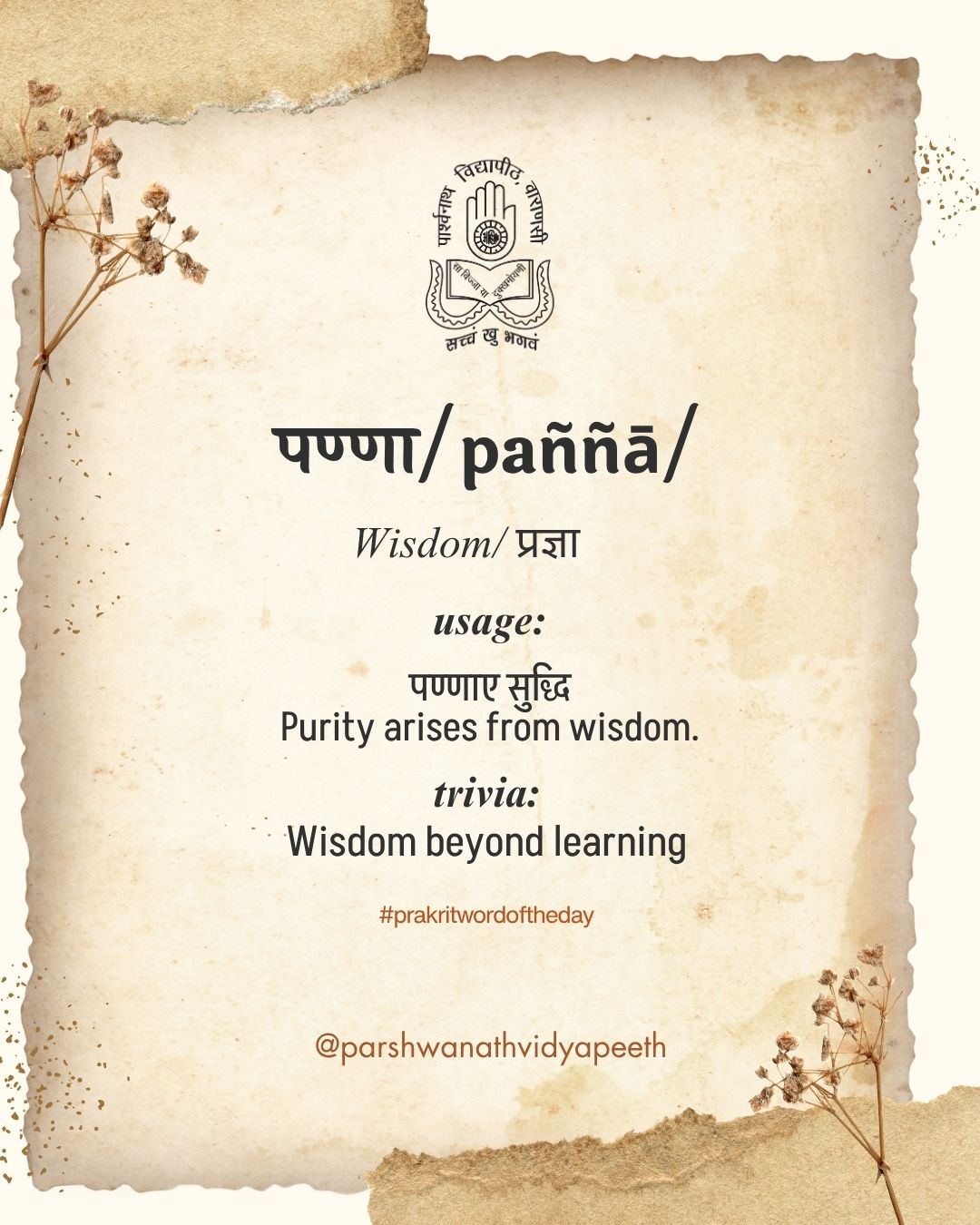
True wisdom is not just accumulation of facts; it is the clarity that purifies thoughts, words, and actions. Through paññā, one develops the ability to distinguish the eternal from the temporary and the self from the non-self.“पण्णाए सुद्धि” reminds us that inner purity blossoms from awakened understanding. When wisdom dawns, ignorance fades, and the soul moves closer to liberation.
May the light of paññā illuminate our path toward clarity, purity, and spiritual growth.
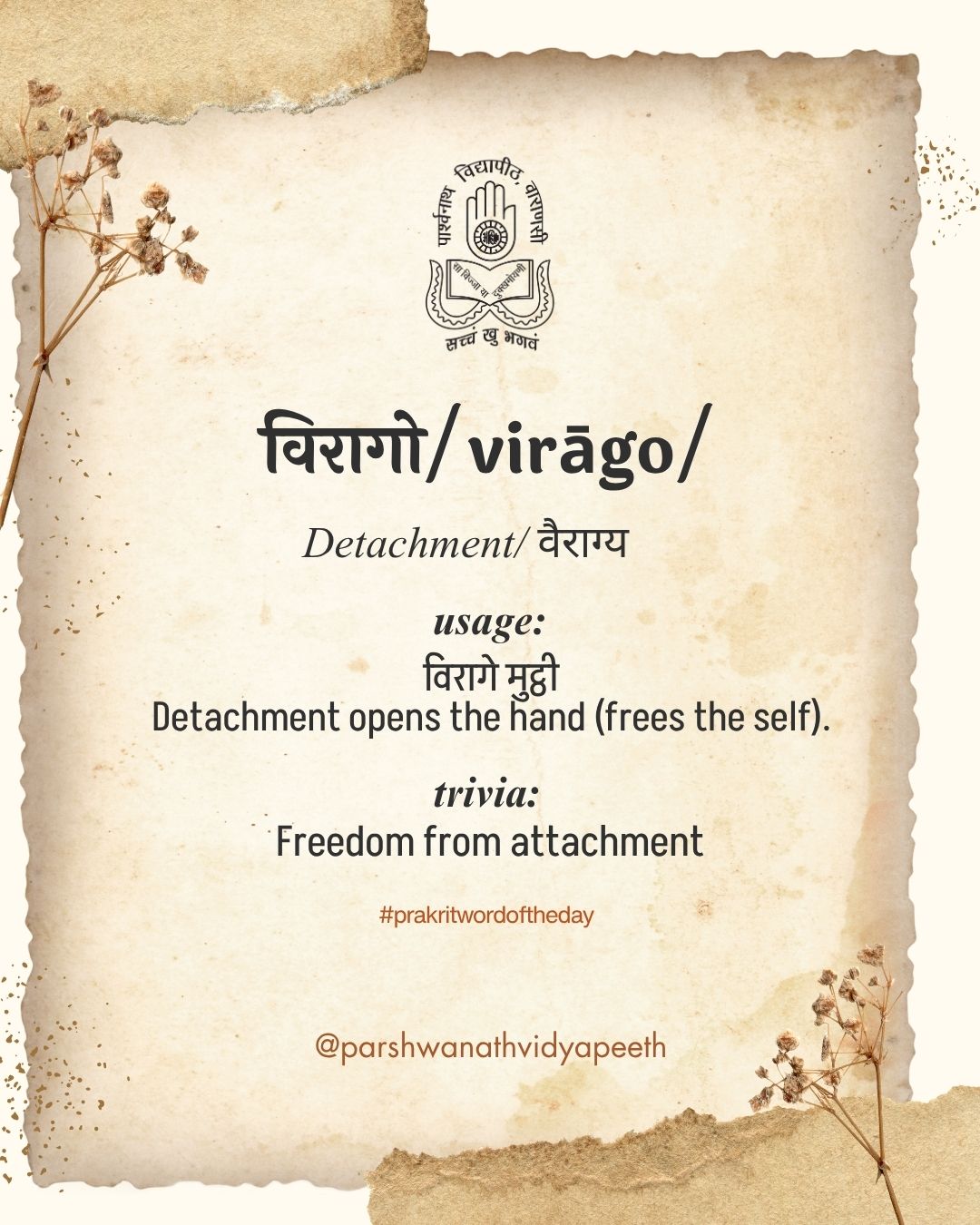
विरागो (virāgo) = Detachment / Freedom from attachment
True detachment is like an open hand — nothing is tightly grasped, yet everything is gently held. Through *virāgo*, one moves beyond possessiveness and ego, embracing simplicity and spiritual awareness.
“विरागे मुट्ठी” reminds us that when we release our grip on worldly cravings, we truly free ourselves.
May the spirit of *virāgo* guide us toward inner peace, balance, and liberation.
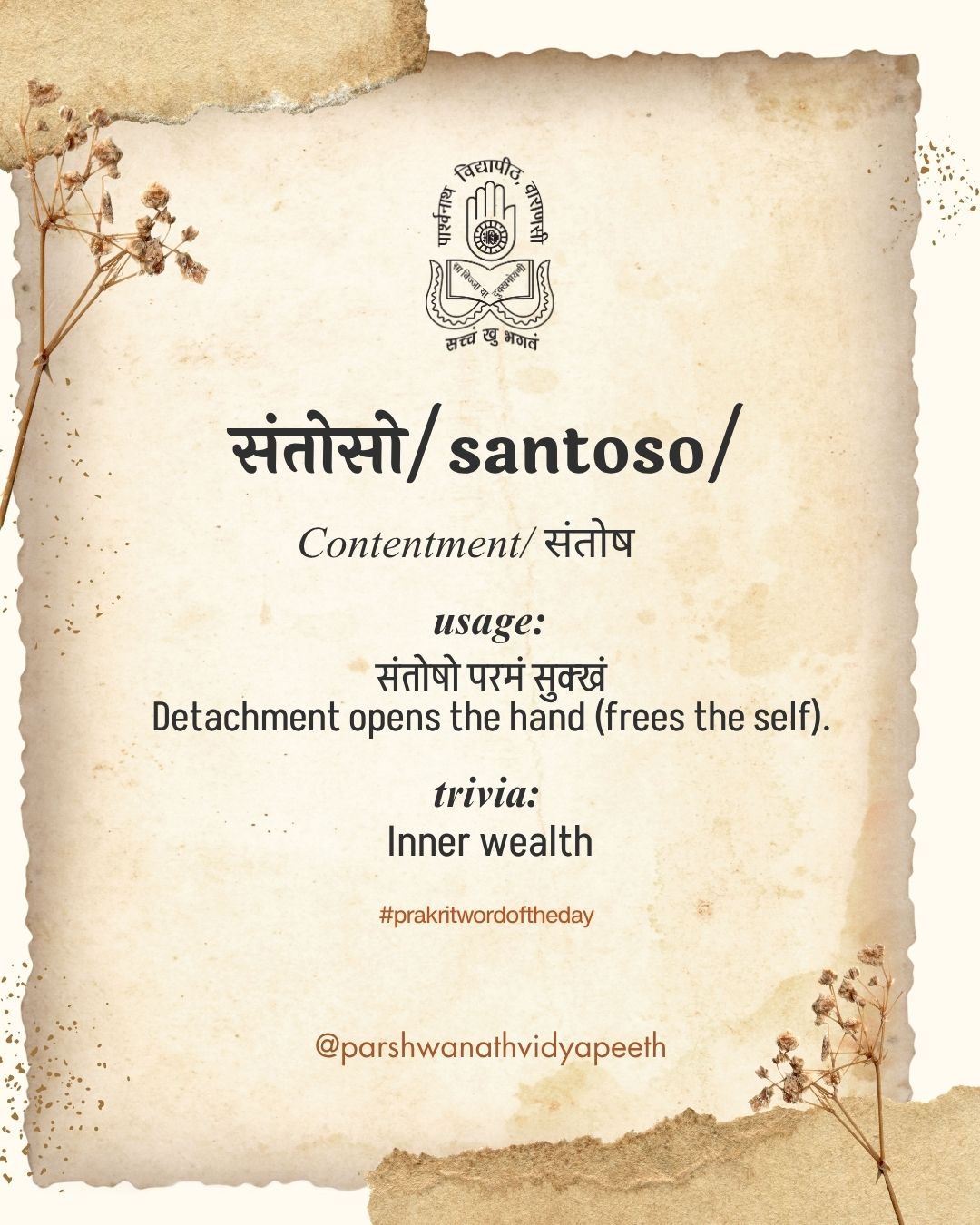
संतोसो (santoso) = Contentment / Inner satisfaction
A content heart is richer than a full treasury. Through santoso, one learns to live simply, value the present moment, and cultivate gratitude for life’s blessings.
“संतोसे परं सुखं” reminds us that the greatest happiness is not found in possessions, but in the calm acceptance of what we have.
May the spirit of santoso guide us toward simplicity, gratitude, and inner peace.
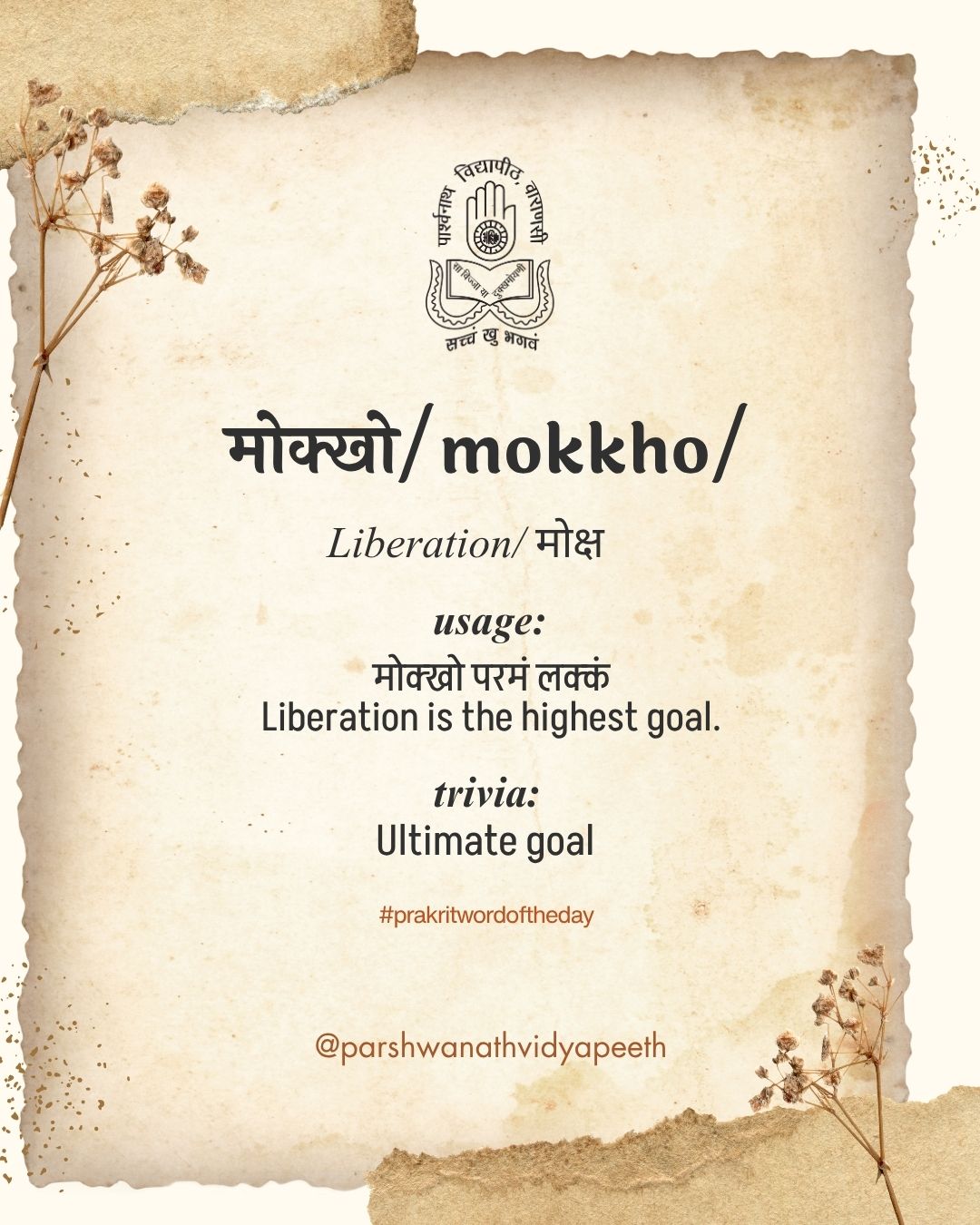
मोक्खो (mokkho) = Liberation / Moksha
It is the pure state of the soul—free from attachment, suffering, and worldly limitations. Jain teachings emphasize self-discipline, non-violence, and inner awareness as the path that gradually leads the soul toward this ultimate liberation.
“मोक्खो परमं लक्कं” reminds us that beyond all worldly pursuits, the highest aspiration of life is spiritual freedom and purity of the soul.
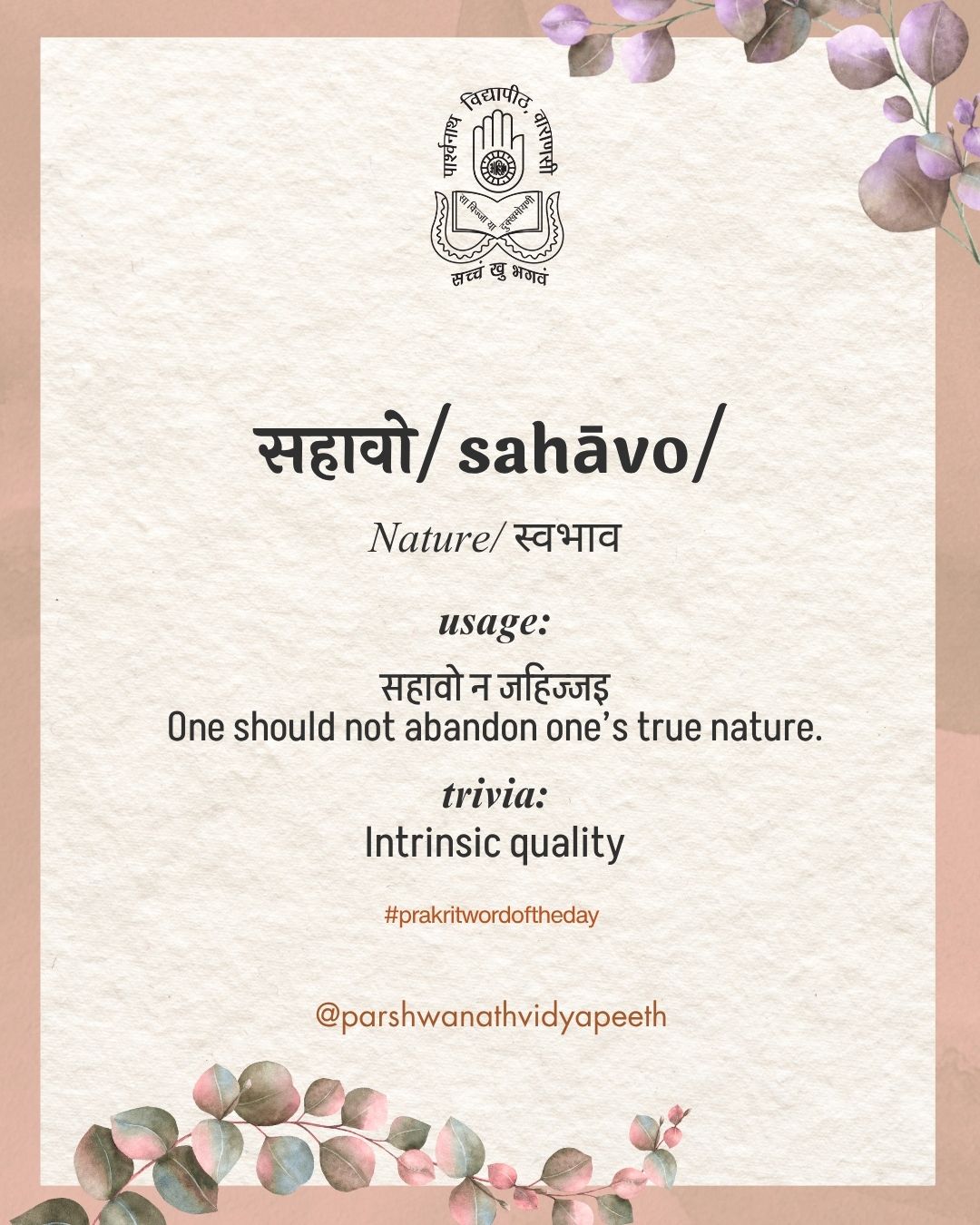
सहावो (sahāvo) = Nature / स्वभाव
It reminds us that beneath all roles, emotions, and worldly attachments lies our authentic self. Jain teachings emphasize returning to this natural state through awareness, detachment, and right conduct.“सहावो न जहिज्जइ” inspires us to stay true to our inner essence, even amidst life’s challenges and distractions.
May this wisdom guide us to honor our true nature and live with clarity, balance, and inner peace.
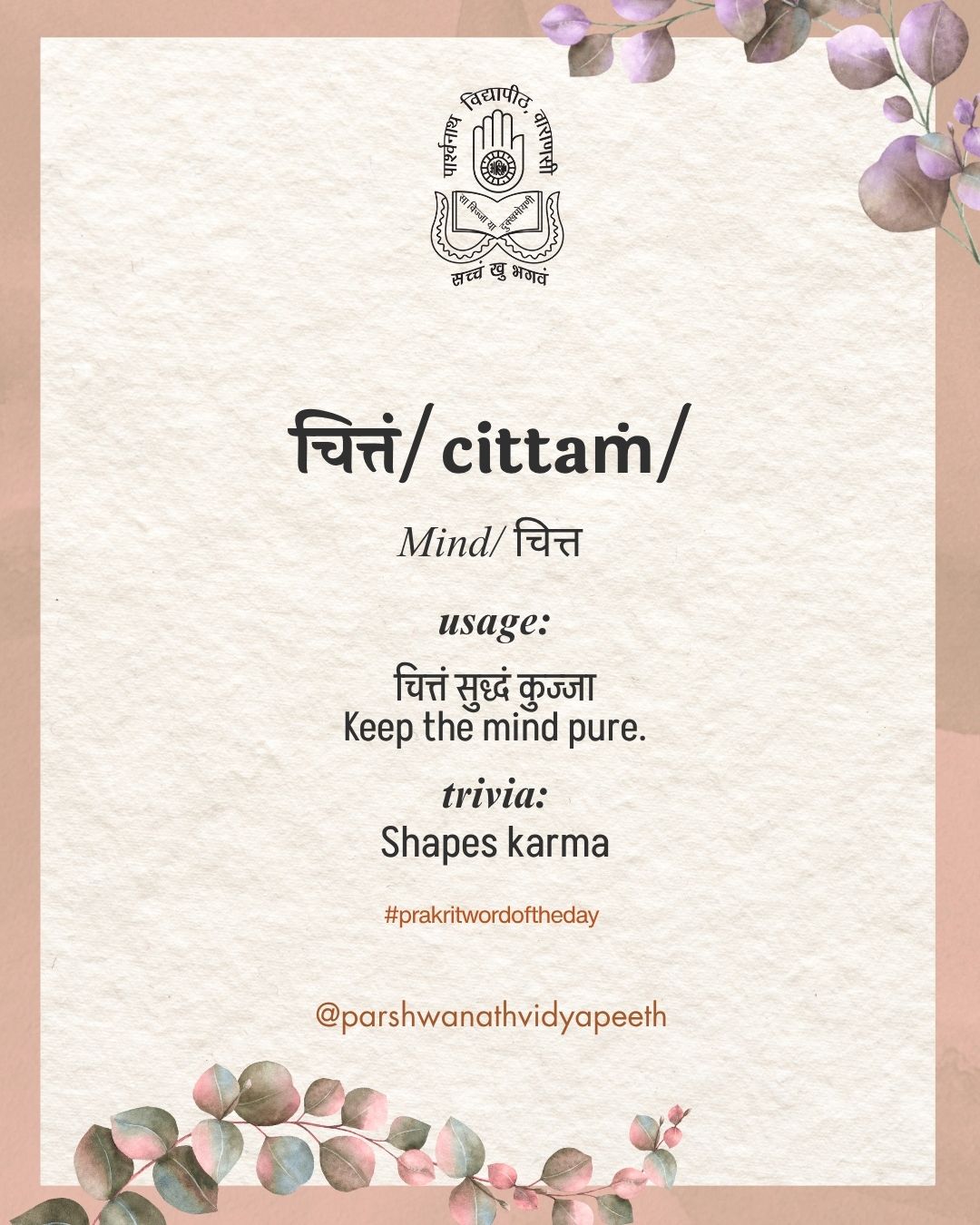
चित्तं (cittam) = Mind / चित्त
It reminds us that controlling and purifying our thoughts is the first step toward spiritual progress. By cultivating mindfulness, positivity, and detachment, we can keep our inner world calm and clear.
“चित्तं सुद्धं कुज्जा” inspires us to consciously nurture purity within, letting go of negativity and distractions that cloud our judgment.
May this wisdom guide us to maintain clarity of thought, purity of intention, and a peaceful state of being.
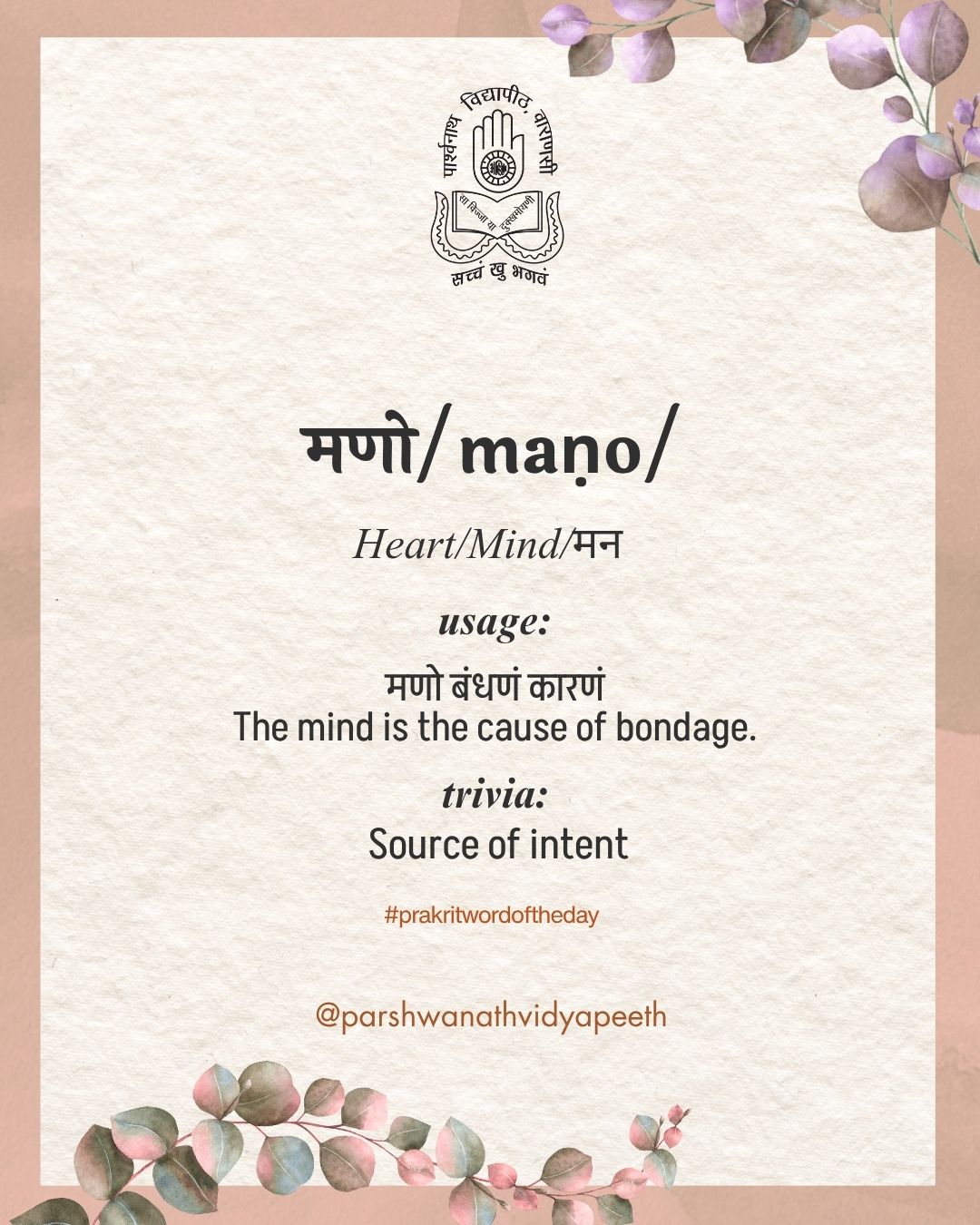
When the mind is clouded by attachment, anger, ego, or desires, it becomes the कारण (cause) of bondage, tying the soul to cycles of suffering. However, when the mind is disciplined, aware, and pure, it becomes the very path to liberation. Thus, the same mind that binds can also free.
मणो (maṇo) = Heart/Mind / मन
It reminds us that true control is not over the outer world, but over our inner reactions and intentions. By cultivating mindfulness, detachment, and clarity, we can transform our mind from a source of bondage into a source of freedom.“मणो बंधणं कारणं” teaches us to observe and refine our thoughts, for they shape our reality and spiritual journey.
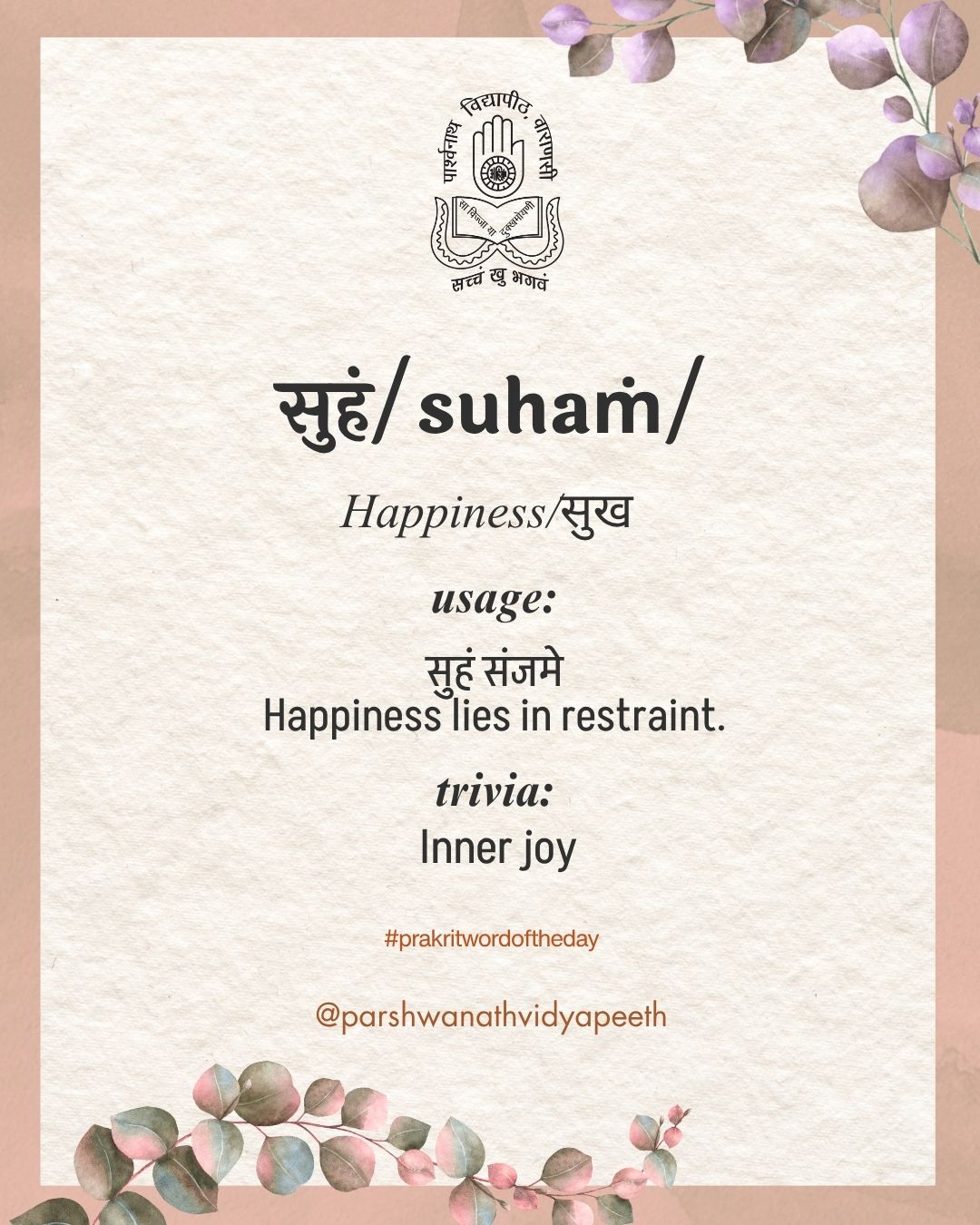
सुहं (suhaṁ) = Happiness / Inner Joy
Real happiness is शांत (calm), स्थिर (steady), and भीतर से उत्पन्न (born within). It is not dependent on circumstances, but on the state of the mind and soul. Through restraint, one cultivates clarity, peace, and lasting contentment.
“सुहं संजमे” reminds us that when we master our impulses, we discover a more meaningful and enduring form of happiness.
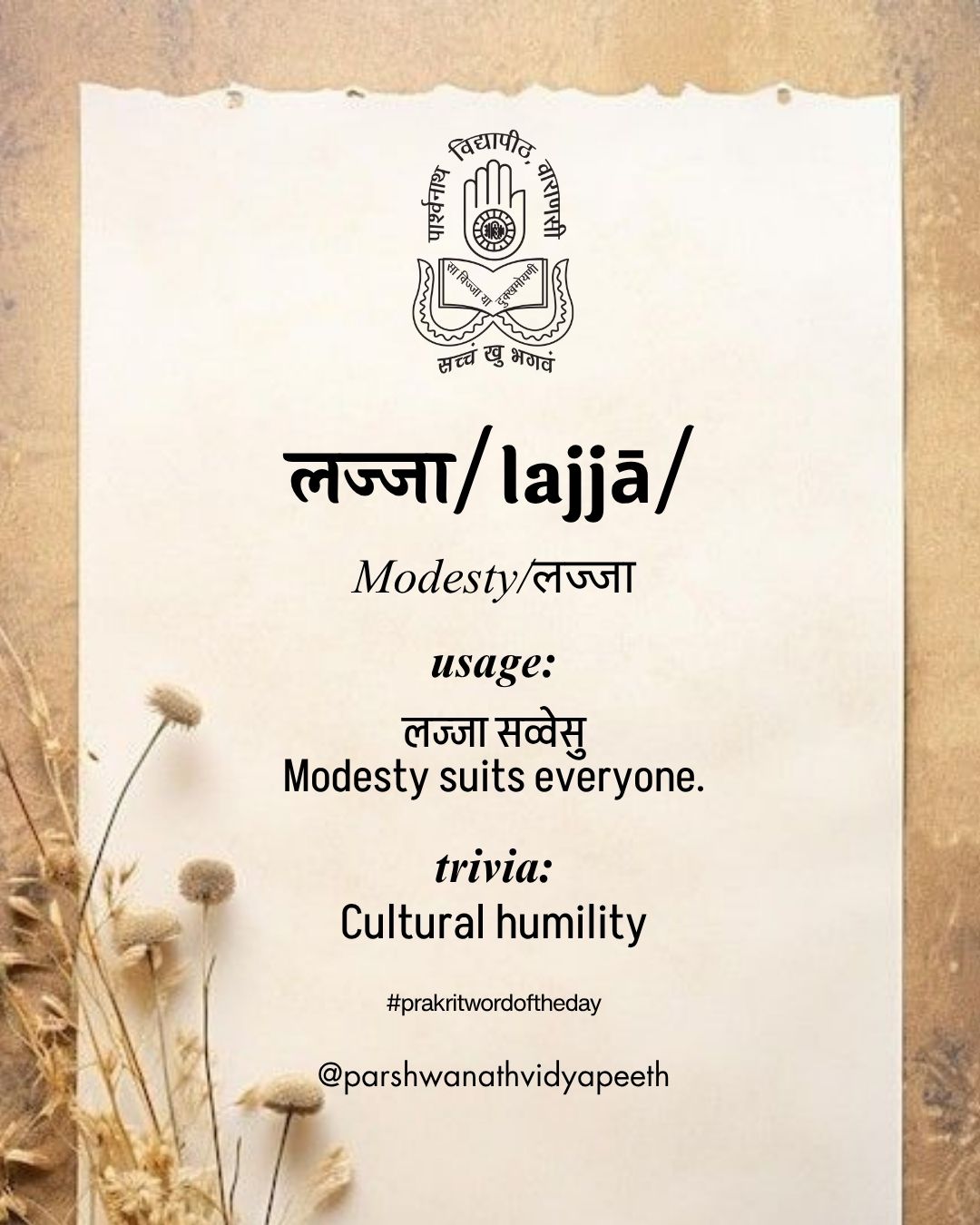
लज्जा (lajjā) = The beauty of humility expressed through thoughts, words, and actions.
The phrase “लज्जा सव्वेसु” reminds us that modesty adorns every individual. A modest person naturally earns respect because humility reflects wisdom, maturity, and inner discipline. Modesty creates harmony in relationships and keeps the mind free from arrogance and pride.
In Jain philosophy, modesty is closely connected with simplicity, restraint, non-violence, and ethical living. It teaches us to speak gently, act thoughtfully, and treat every living being with dignity and compassion. A humble heart remains open to learning, self-improvement, and spiritual growth.
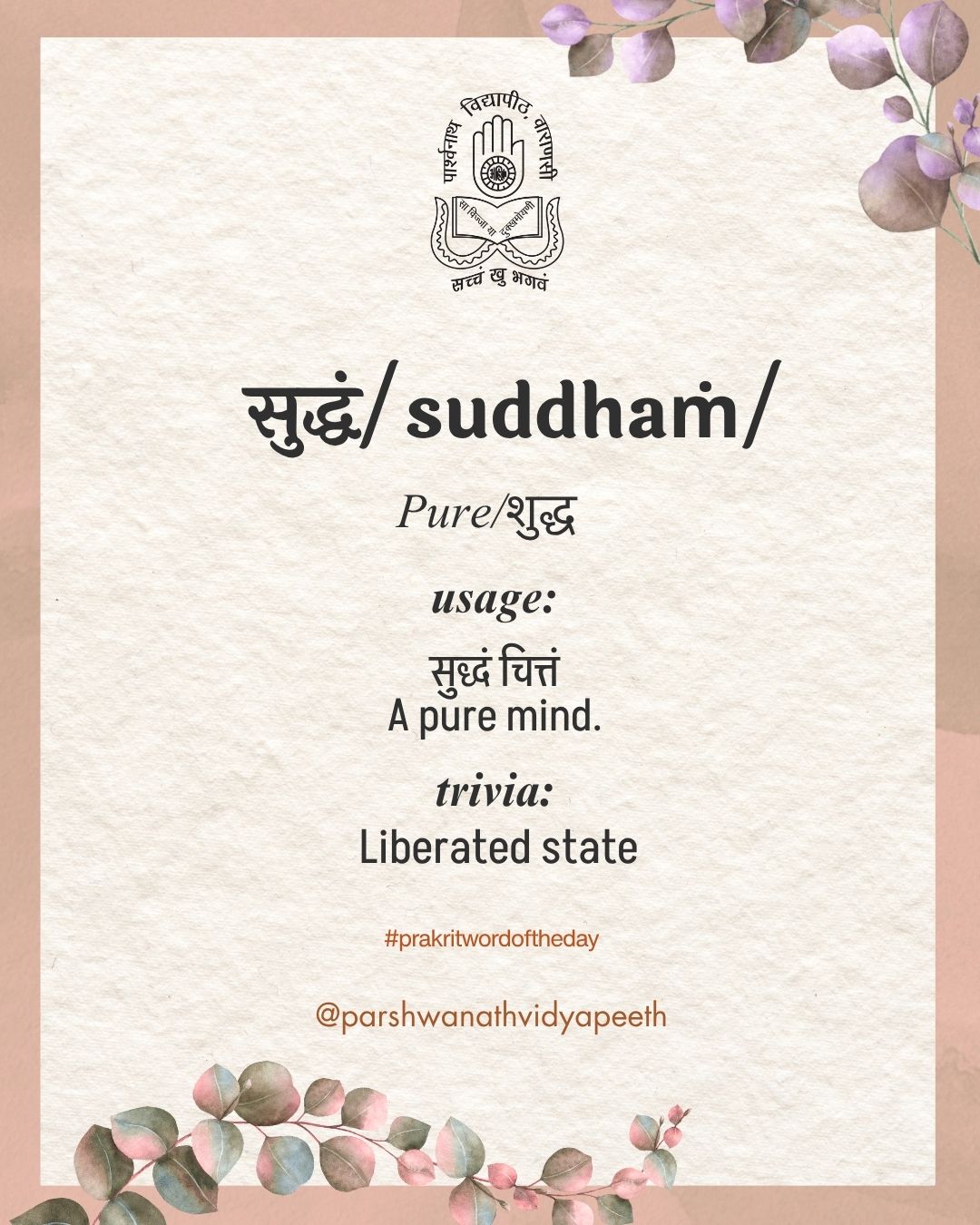
सुद्धं (suddham) = Pure / Inner Clarity
True purity is निर्मल (clean), शांत (calm), and निष्कपट (genuine). It is cultivated through self-awareness, right thinking, and disciplined living. A pure mind naturally leads to peaceful actions and a balanced life.
“सुद्धं चित्तं” reminds us that when the mind is pure, life becomes clear, harmonious, and aligned with truth.
May the essence of suddham bring clarity, peace, and inner balance into your life.
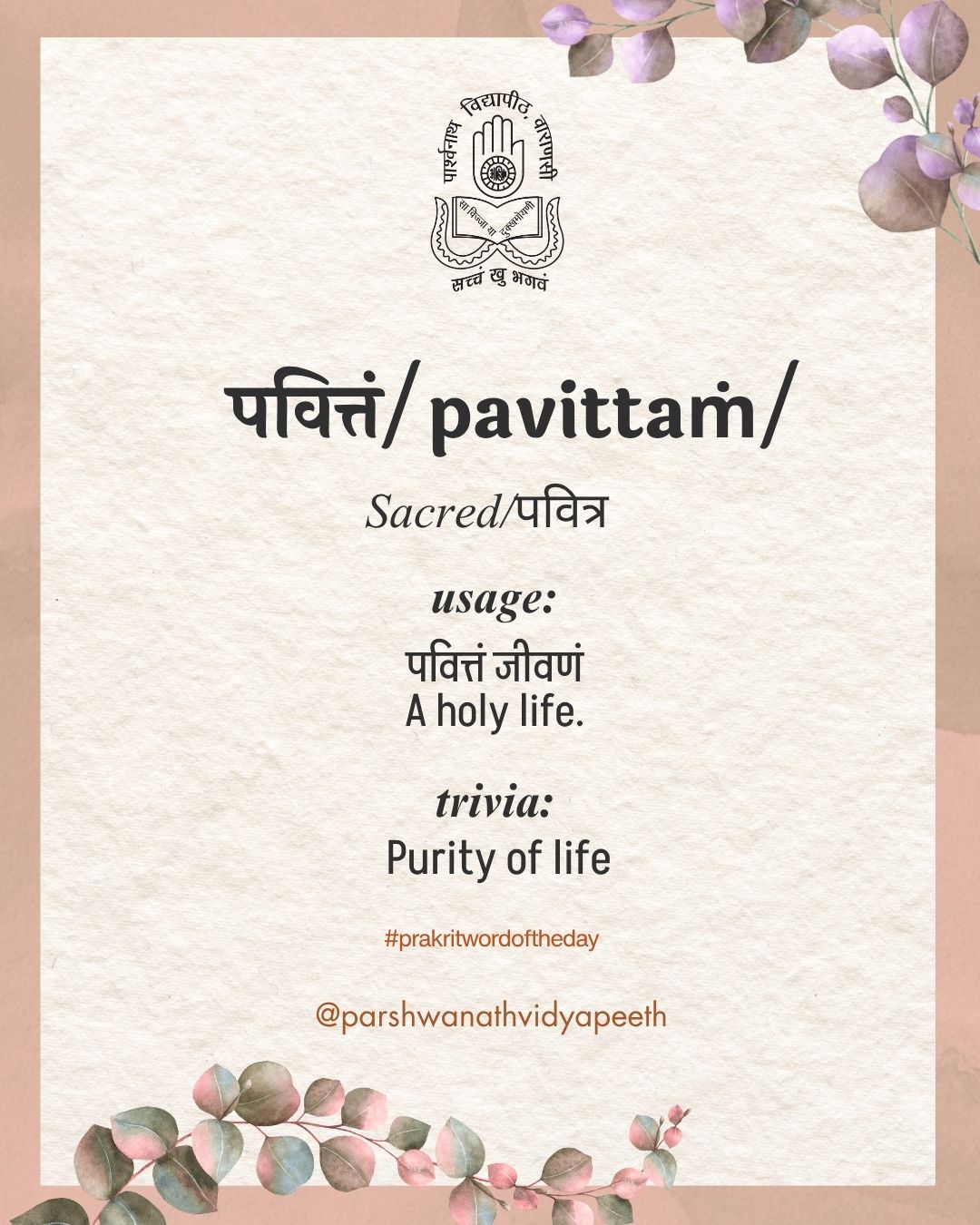
पवित्तं (pavittam) = Sacred / Pure living
A sacred life is marked by करुणा (compassion), संयम (self-control), and सत्य (truth). It is not something imposed from outside but cultivated within through mindful choices and ethical actions.
“पवित्तं जीवणं” reminds us that holiness is reflected in our daily behavior, thoughts, and intentions.
May the essence of pavittam inspire you to live with purity, purpose, and inner peace.
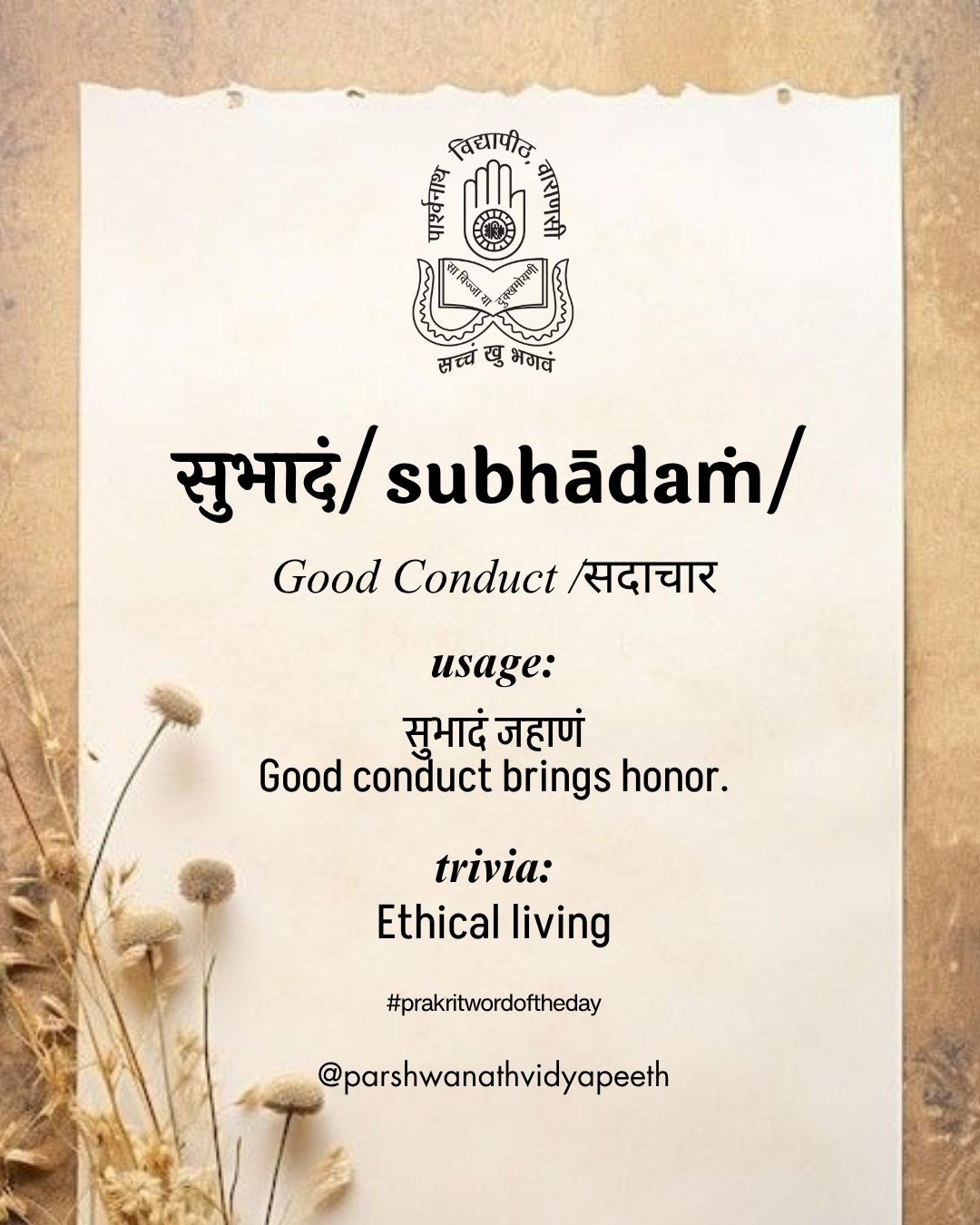
सुभादं (subhādaṁ) = The practice of righteous conduct and moral living in everyday life.
A person with good conduct earns trust, respect, and inner peace. Whether in relationships, learning, society, or spiritual practice, सदाचार becomes the foundation of a meaningful and honorable life. Good conduct not only uplifts an individual but also creates harmony in the world around them.
“सुभादं जहाणं” reminds us that noble actions always leave a lasting impact. In a world where behavior shapes identity, practicing kindness, humility, and integrity becomes a true path toward wisdom and respect.
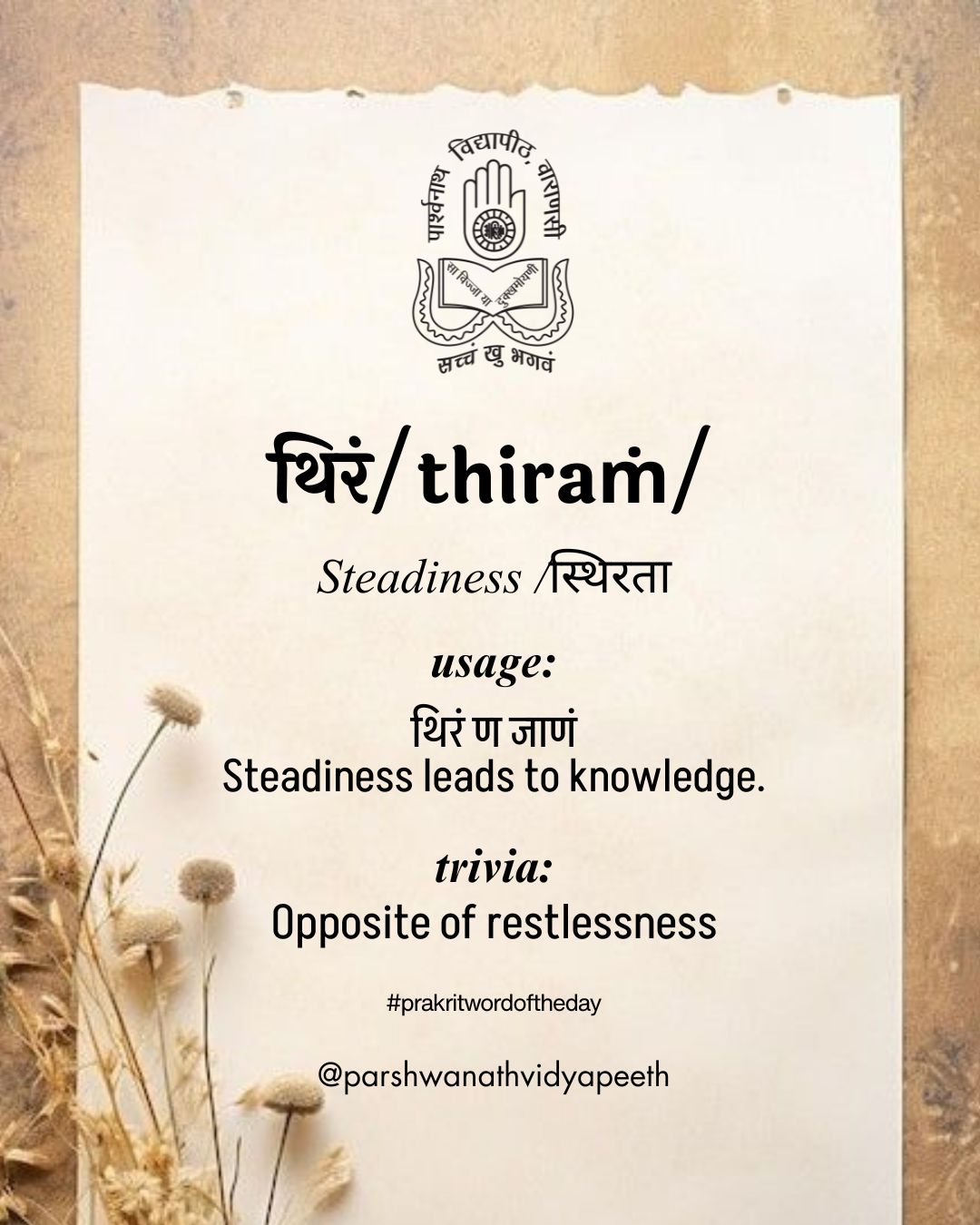
थिरं (thiram) = The quality of remaining firm, calm, and centered amidst change and distraction.
True knowledge is not gained in haste or confusion, but through patience, focus, and consistency. Whether in spiritual practice, learning, or daily life, steadiness becomes the foundation for clarity and self-awareness.
“थिरं ण जाणं” reminds us that when the mind becomes stable, wisdom naturally unfolds. In a world full of noise and distractions, cultivating inner steadiness is itself a path toward growth and enlightenment.
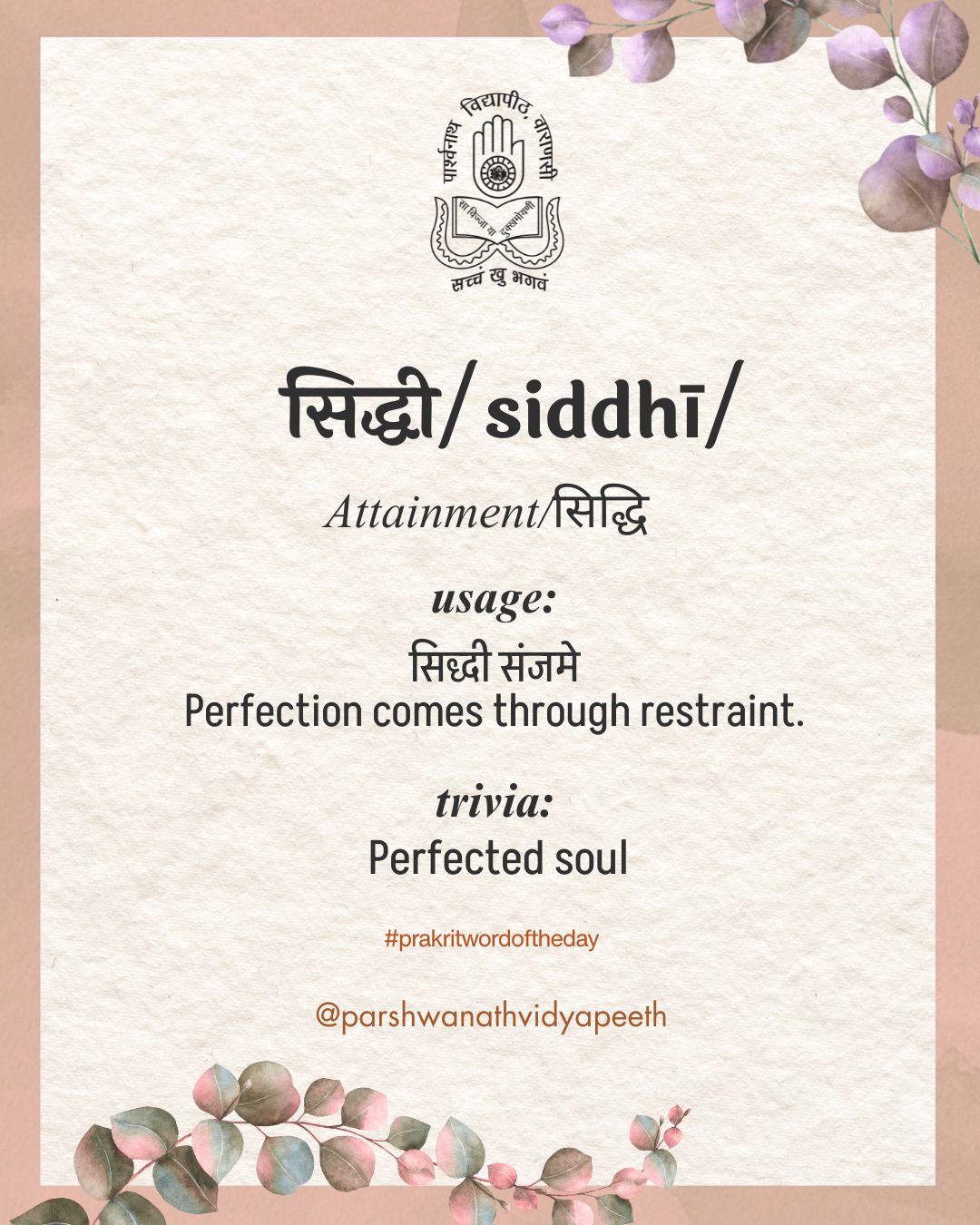
सिद्धि (siddhi) = The culmination of discipline and inner mastery
A person moves toward siddhi not by external achievements alone, but through संयम (self-restraint), awareness, and detachment. It reflects a journey where desires are controlled, actions are mindful, and the soul gradually evolves toward liberation.
“सिद्धि संजमे” reminds us that true perfection is not instant—it is cultivated through patience, discipline, and conscious living.
May the essence of siddhi inspire you to embrace restraint, refine your path, and move closer to your highest self.
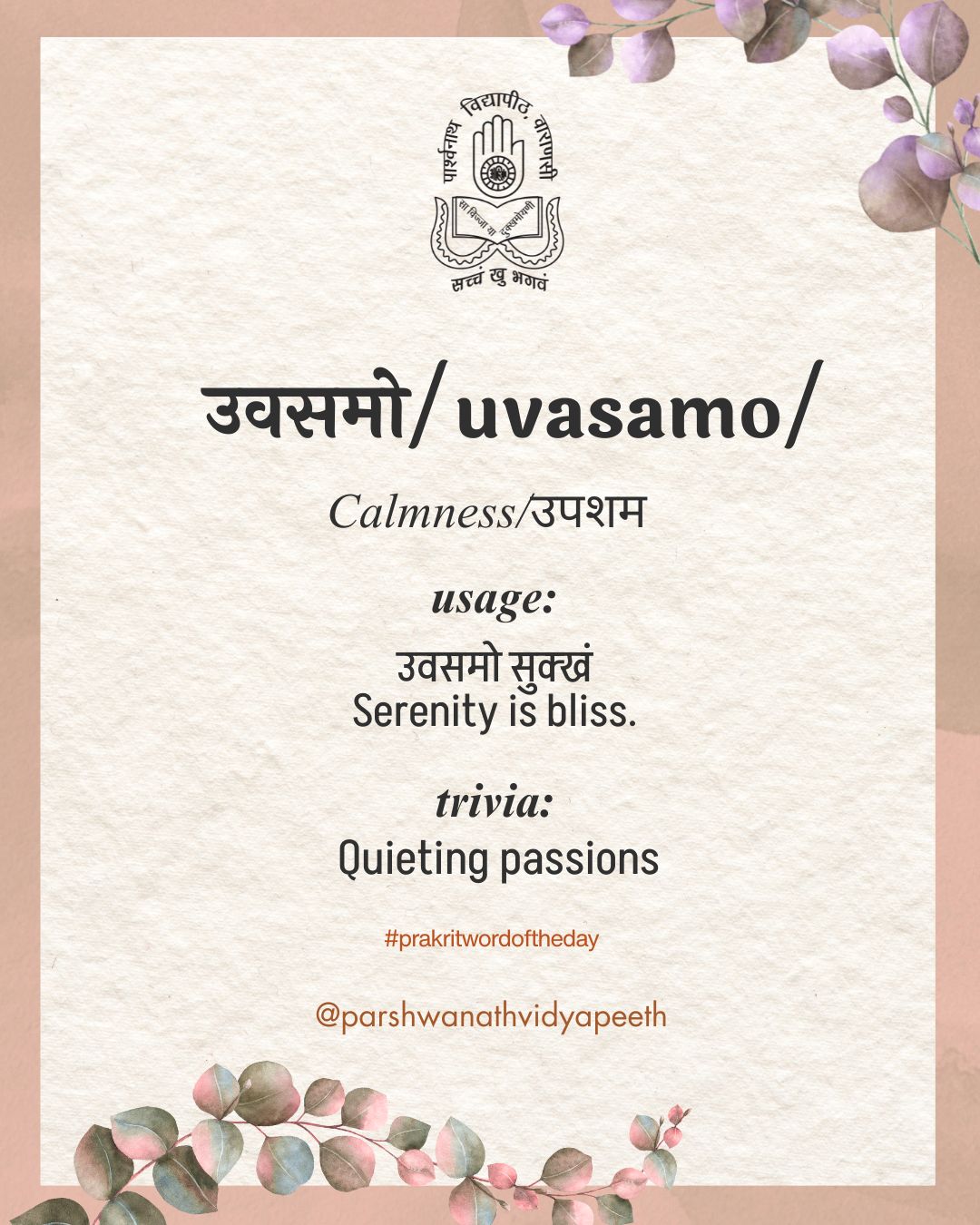
उवसमो (uvasamo) = The art of calming inner storms.A person who attains calmness is no longer controlled by external situations. Instead of reacting impulsively, they respond with awareness and balance. This state is considered essential for spiritual growth, as it creates space for clarity, wisdom, and self-realization.
“उवसमो सुक्खं” reminds us that true happiness is not found in chaos or constant pursuit, but in शांत मन—a mind at peace.
May the essence of uvasamo guide you to slow down, let go of inner noise, and embrace the bliss of calmness.
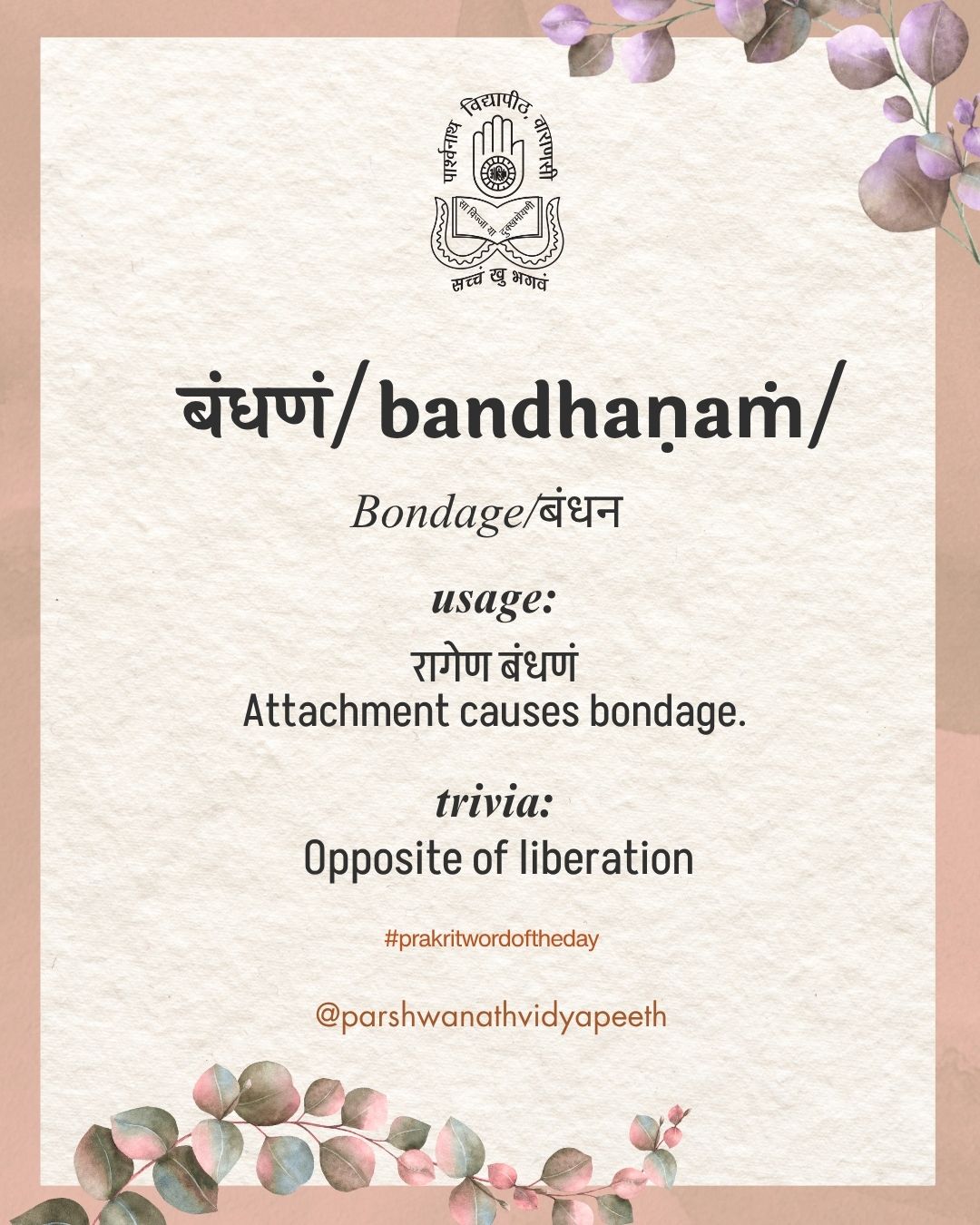
बंधणं (bandhanaṃ) = The chain of attachment and illusion.
A person entangled in attachment often loses clarity and balance. Instead of experiencing life with awareness, they become driven by मोह (delusion) and राग (attachment). True growth begins when one recognizes these bonds and gradually moves toward detachment.
“रागेण बंधणं” reminds us that attachment is the root of all bondage, and only through awareness and self-discipline can one move toward liberation.
May the wisdom of bandhanaṃ guide you to release attachments, cultivate detachment, and walk the path of inner freedom.
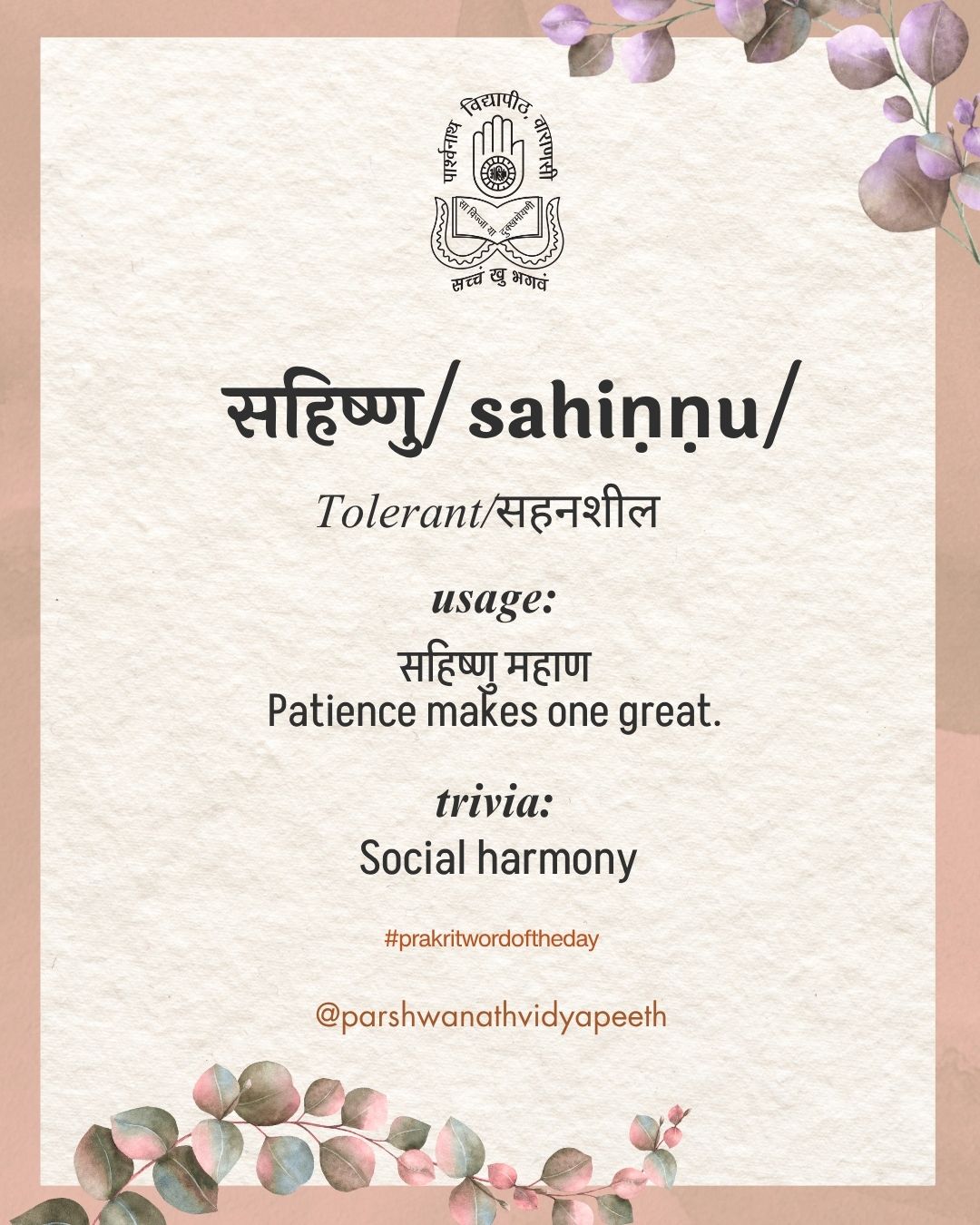
सहिण्णु (sahiṇṇu) = The grace of patience and acceptance
A truly सहनशील (tolerant) person remains steady in challenging situations. Instead of reacting with anger or frustration, they choose understanding, empathy, and balance. This quality builds stronger relationships and promotes social harmony.
“सहिण्णु महान” reminds us that greatness lies in staying composed, embracing differences, and handling life with patience.
May the essence of sahiṇṇu guide you to cultivate calmness, practice tolerance, and create harmony within and around you.
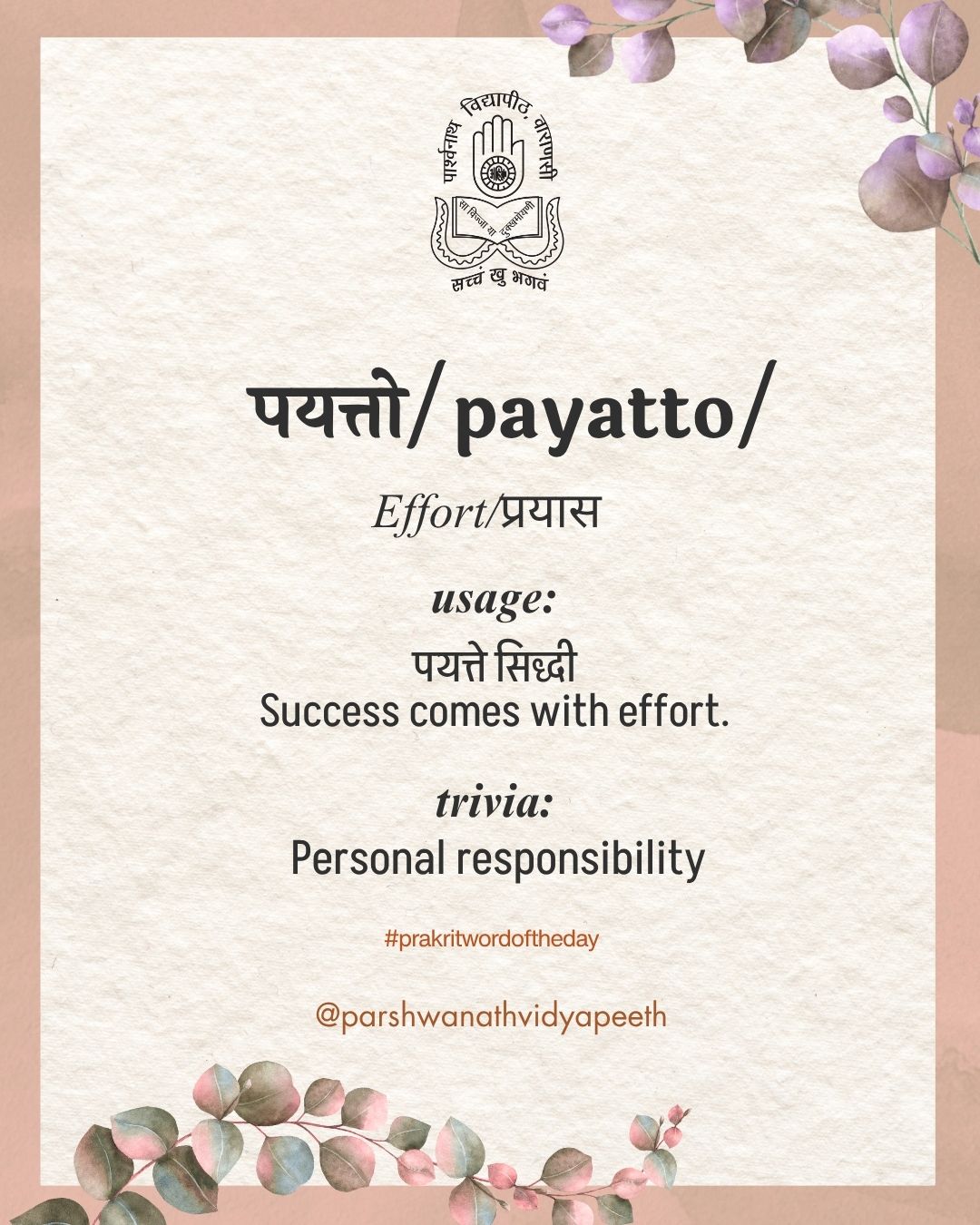
पयत्तो (payatto) = The power of sincere and persistent effort
A person who embraces प्रयास (effort) does not wait for circumstances to change—they take initiative. With धैर्य (patience), लगन (dedication), and आत्मविश्वास (self-belief), they move steadily toward their goals.
“पयत्ते सिद्धी” reminds us that success is never a matter of luck alone—it is earned through continuous effort and determination.
May the essence of payatto inspire you to take charge, stay committed, and turn your efforts into meaningful achievements.
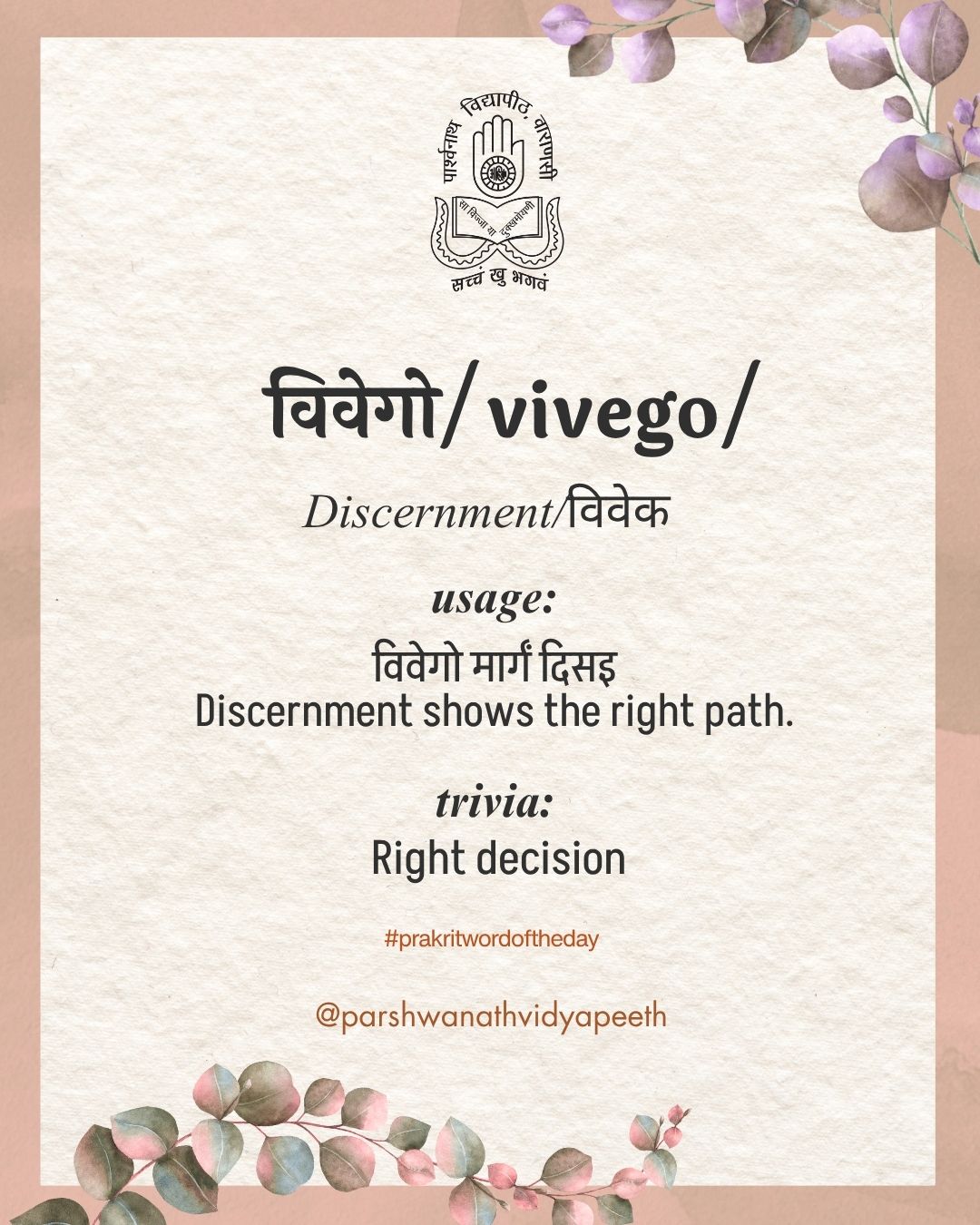
विवेगो (vivego) = The power to choose wisely in every situation
A person with true विवेक does not get swayed by भ्रम (confusion) or बाहरी आकर्षण (external temptations). Instead, they act with संतुलन (balance), सोच (thoughtfulness), and आत्मबोध (self-awareness).
“विवेगो मग्गं दिसइ” reminds us that when we cultivate discernment, life’s path becomes clearer—even in moments of doubt.
May the essence of vivego guide you toward right decisions, inner clarity, and a purposeful life.
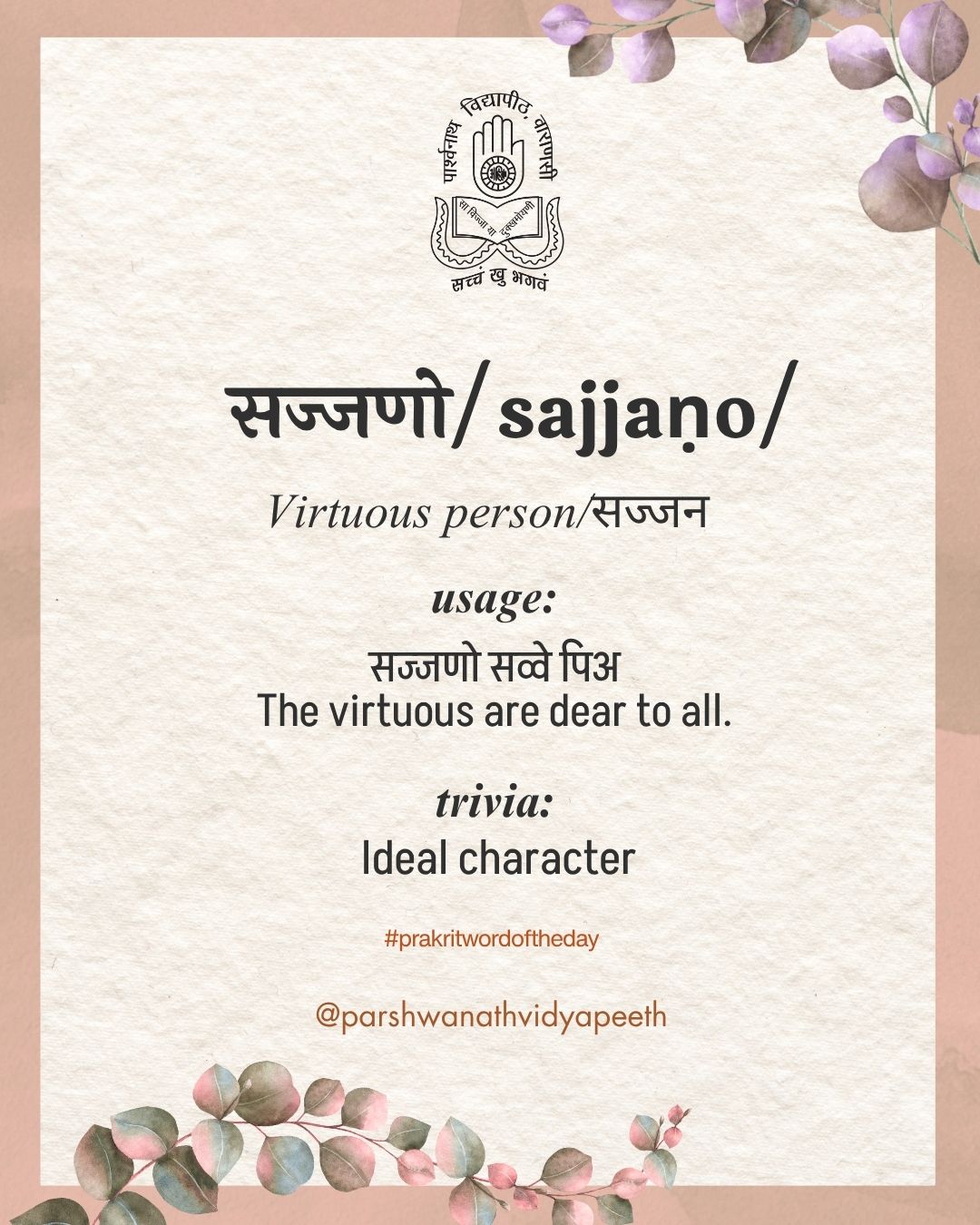
सज्जणो (sajjaṇo) = One who embodies goodness in character and conduct
Such individuals naturally earn respect and affection—not by seeking it, but by living with सत्य (truth), अहिंसा (non-violence), and सहनशीलता (tolerance). Their presence brings trust, warmth, and positivity into every space they enter.
“सज्जणो सव्वे पिअ” reminds us that goodness is universally cherished—it transcends boundaries and connects hearts.
May the essence of sajjaṇo inspire you to live with integrity, kindness, and grace.
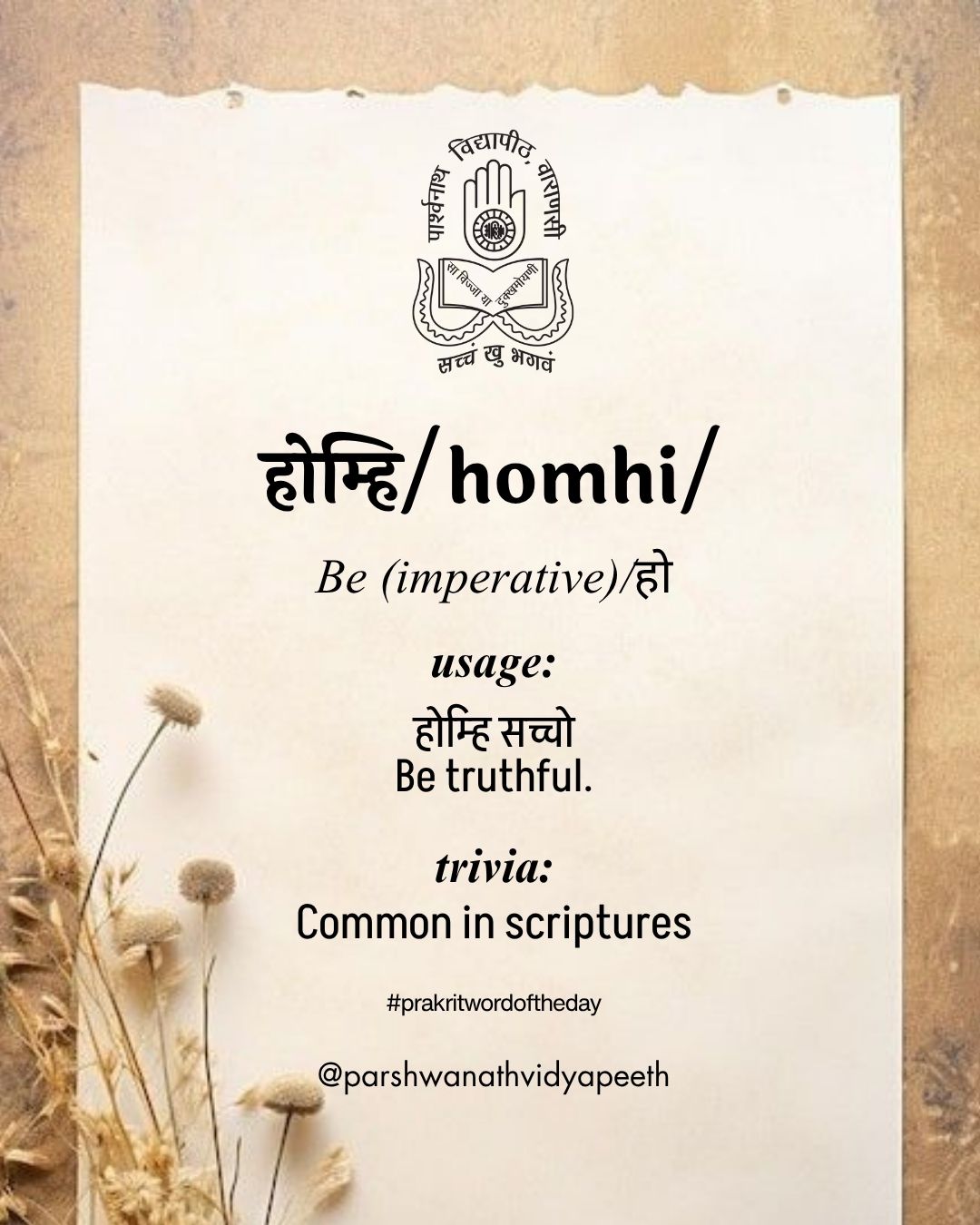
In Prakrit, “होम्हि” (homhi) means “Be” or “Become.” It is commonly found in scriptures as an encouragement to cultivate virtues and noble conduct.
The phrase “होम्हि सच्चो” reminds us to be truthful in our thoughts, words, and actions. In Jain philosophy, truthfulness (satya) is a fundamental virtue that fosters trust, integrity, and inner peace.
Every day offers an opportunity to become wiser, kinder, and more authentic.
होम्हि inspires us not just to admire virtues, but to live them.
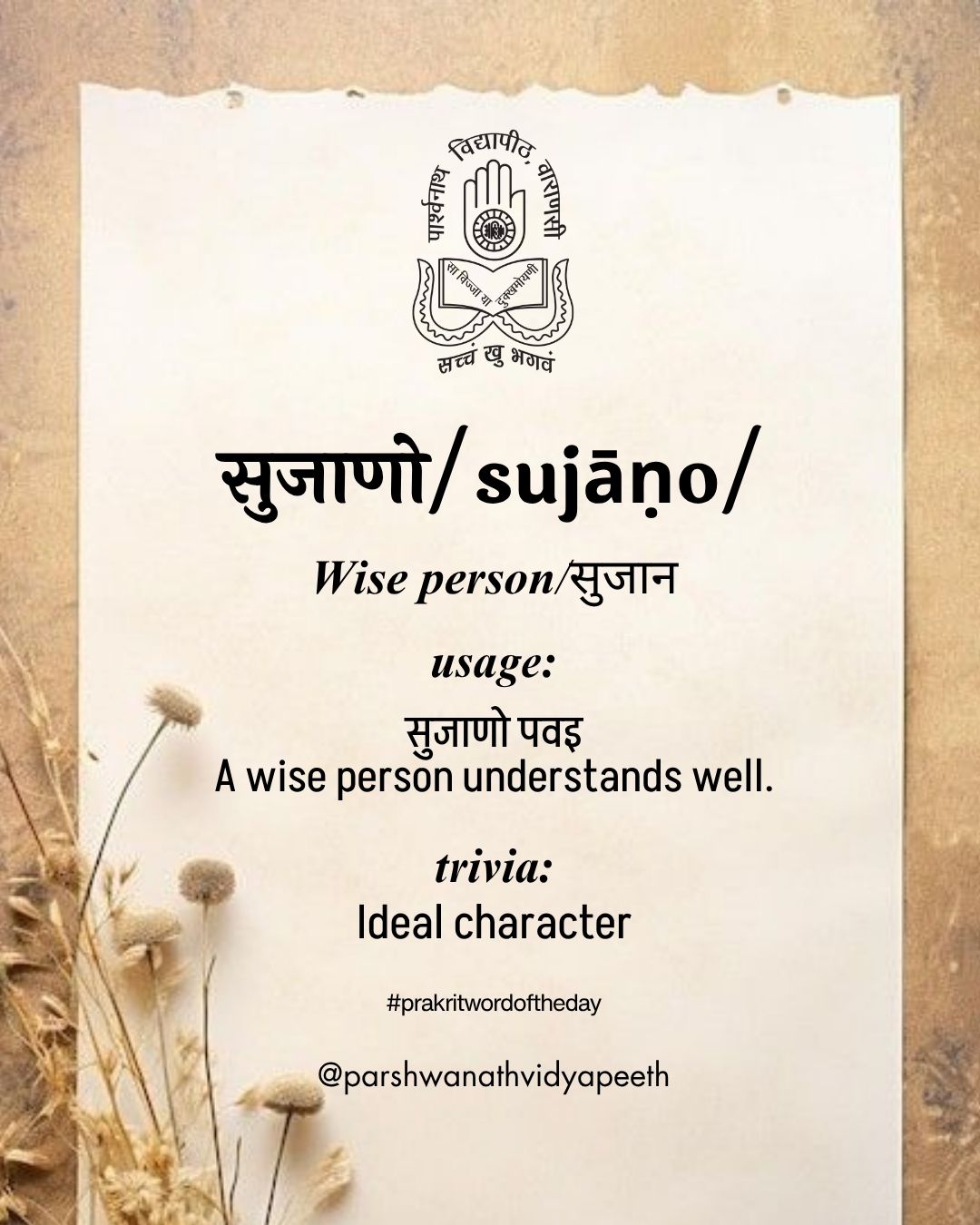
In Prakrit, “सुजाणो” (sujāṇo) means a wise, discerning, and understanding person. It refers not merely to someone with knowledge, but to one who possesses good judgment, insight, and the ability to distinguish right from wrong.
The phrase “सुजाणो पवई” reminds us that wisdom is reflected in understanding—seeing situations clearly, learning from experience, and acting with thoughtfulness and compassion.
In Jain philosophy, wisdom is closely connected with right knowledge (samyak jñāna) and right perception (samyak darśana). A truly wise person seeks truth, practices self-awareness, and uses knowledge for the welfare of all.
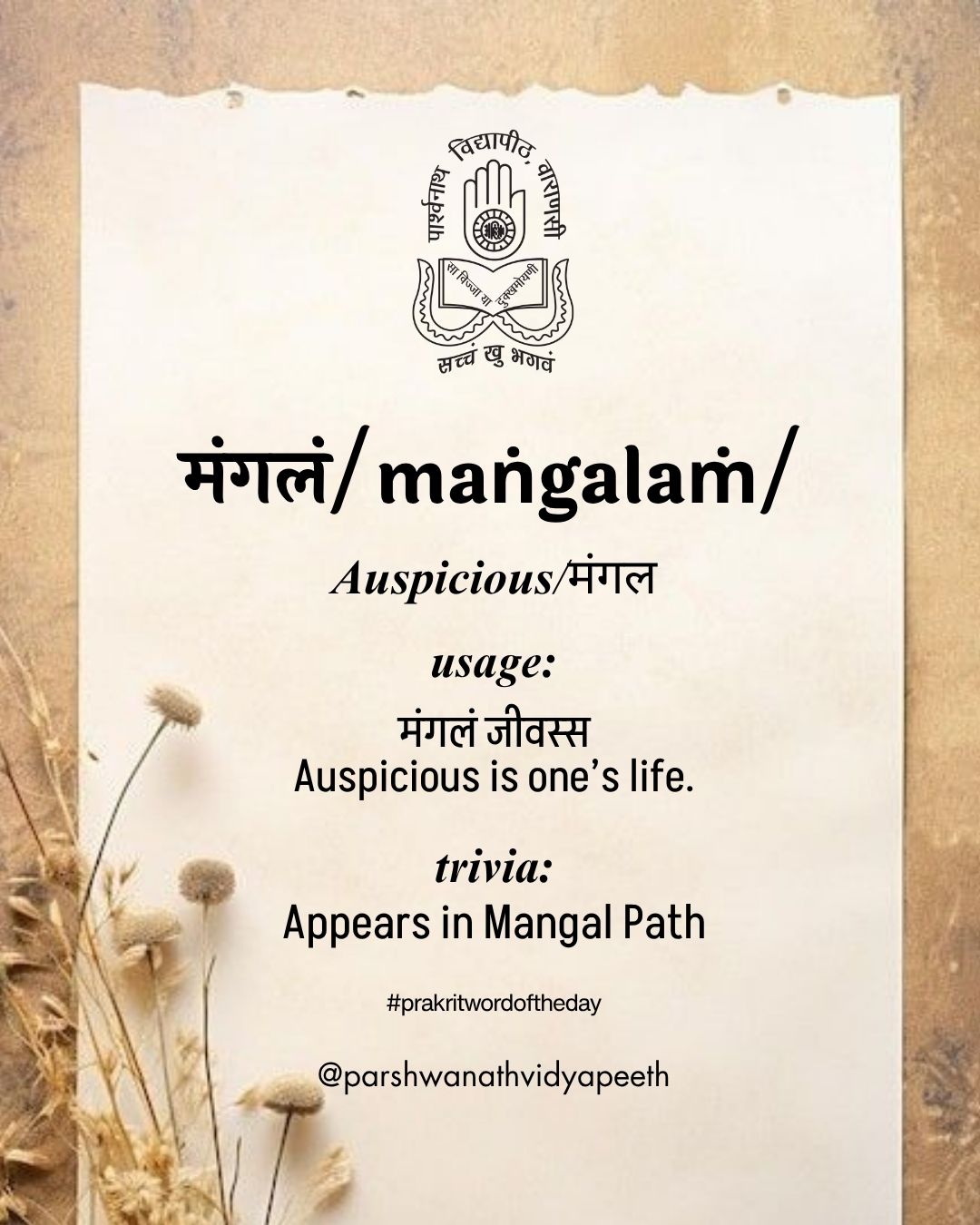
In Prakrit, “मंगलं” (maṅgalaṃ) means auspiciousness, blessedness, welfare, or good fortune. It represents that which brings positivity, harmony, and spiritual well-being into life.
The phrase “मंगलं जीवस्स” reminds us that true auspiciousness is not found in external possessions alone, but in the way one lives. A life guided by virtue, compassion, self-discipline, and right conduct becomes genuinely mangal—blessed and meaningful.
In Jain philosophy, auspiciousness arises from pure thoughts, noble actions, and a commitment to non-violence (ahiṃsā). When our intentions are pure and our actions benefit others, we create conditions for inner peace and spiritual progress.
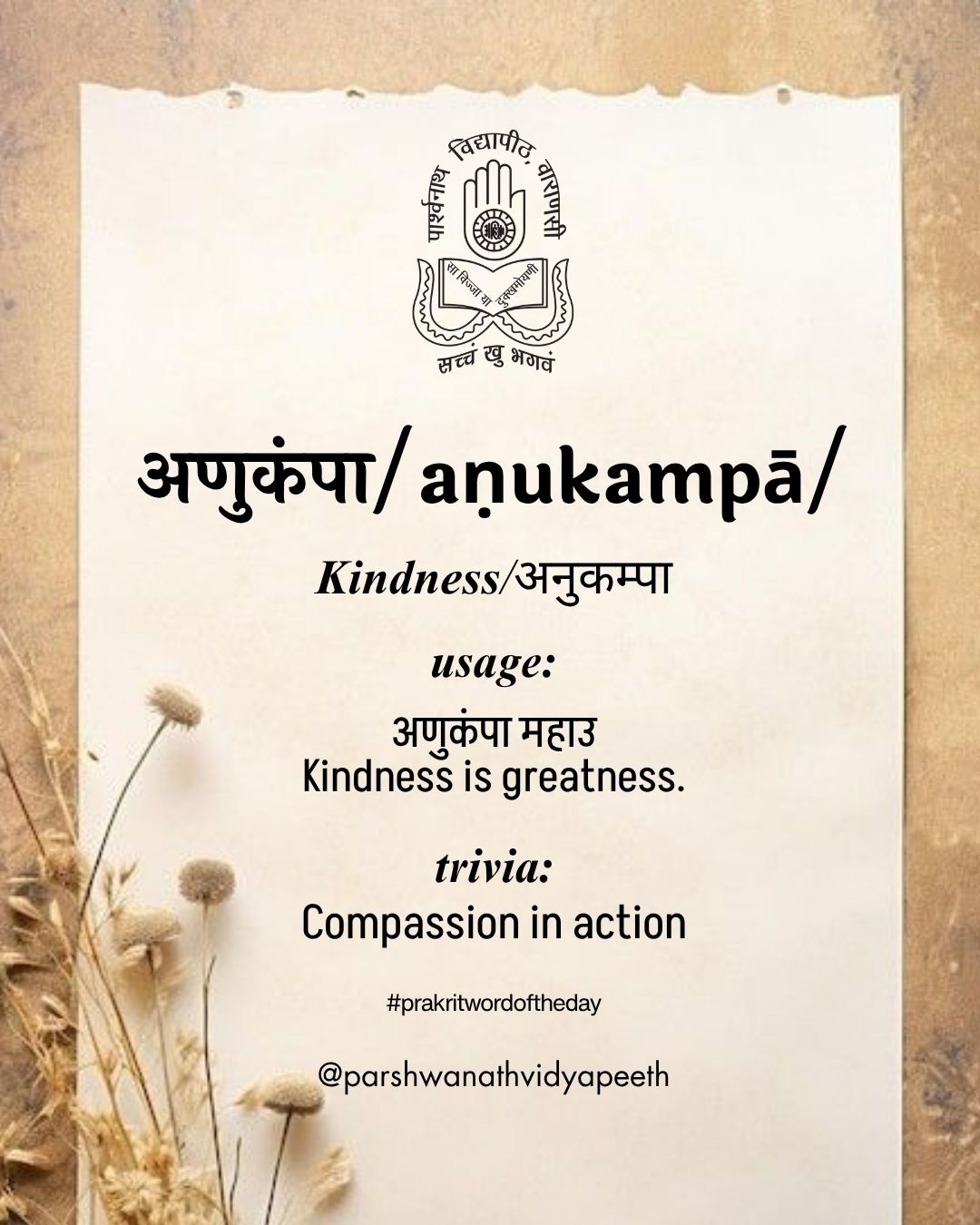
In Prakrit, “अनुकम्पा” (anukampā) means kindness, compassion, mercy, and the heartfelt concern one feels for the well-being of others. It is more than sympathy—it is compassion expressed through action.
The phrase “अनुकम्पा महाड” reminds us that true greatness is not measured by wealth, power, or status, but by the kindness we extend to others. A compassionate heart has the power to heal wounds, build trust, and bring peace to both the giver and the receiver.
In Jain philosophy, अनुकम्पा is closely connected with ahiṃsā (non-violence) and universal friendship toward all living beings. It encourages us to recognize the suffering of others and respond with empathy, care, and understanding.
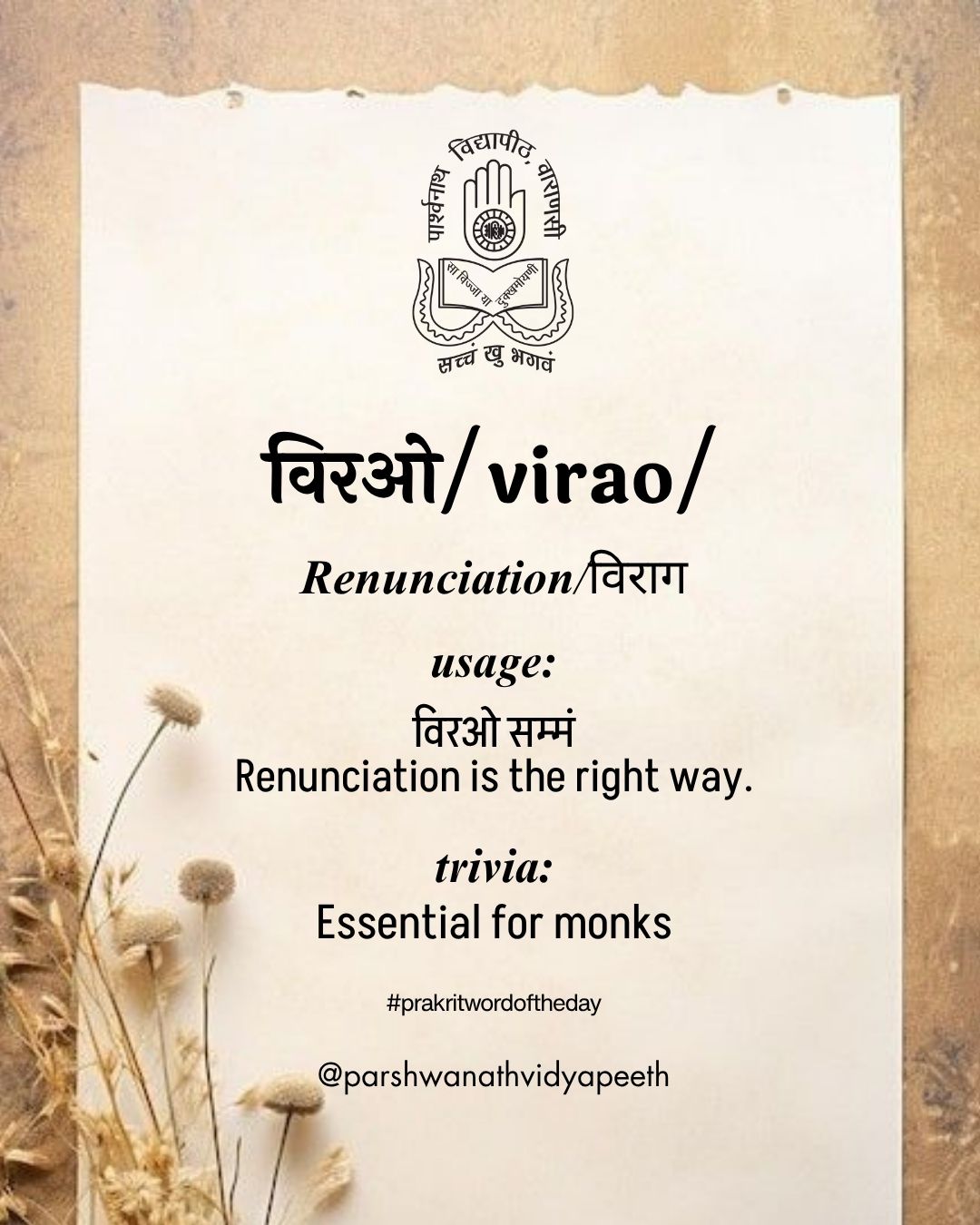
In Prakrit, “विरओ” (virāo) means renunciation, detachment, or freedom from worldly attachments. It reflects the inner state of letting go of desires, possessions, and ego that bind the soul to suffering.
The phrase “विरओ सम्मं” teaches that the path of renunciation is the right path toward inner peace and spiritual growth. True renunciation is not merely abandoning material things but cultivating detachment from cravings and attachments within the mind.
In Jain philosophy, विराग (virāga) is an essential virtue for spiritual progress. It helps individuals overcome passions such as anger, pride, deceit, and greed, allowing the soul to move closer to its pure and natural state.
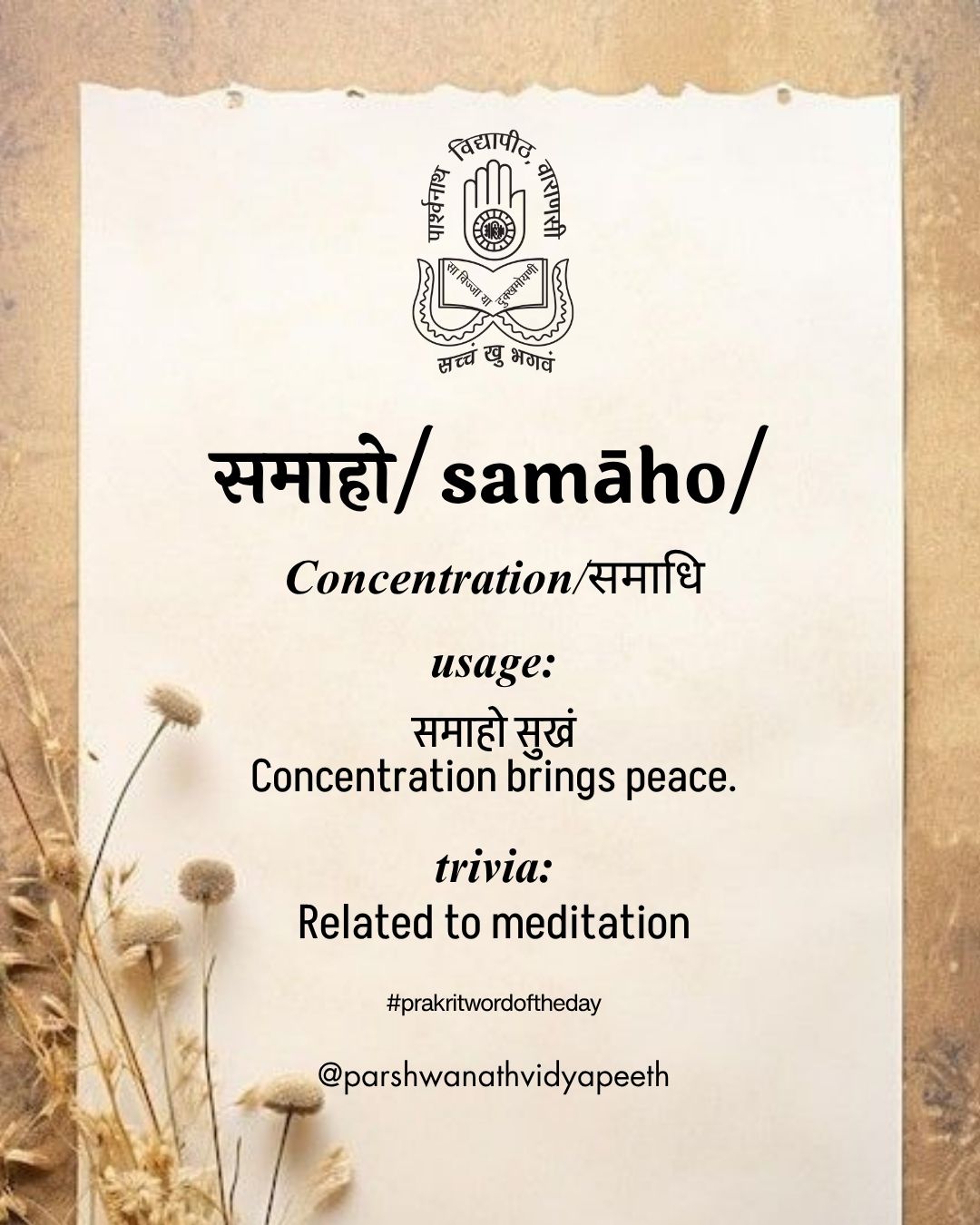
In Prakrit, “समाहो” (samāho) refers to concentration, inner focus, and a state of mental steadiness. It is closely associated with samādhi, the disciplined gathering of the mind into a state of calm awareness and clarity.
The phrase “समाहो सुखं” teaches that true peace arises when the mind is focused and free from distraction. A scattered mind often leads to restlessness, while concentration cultivates balance, wisdom, and inner contentment.
In Jain philosophy, समाधि is an important aspect of spiritual practice. Through meditation, self-discipline, and mindfulness, one learns to direct the mind inward and overcome attachment to external disturbances.
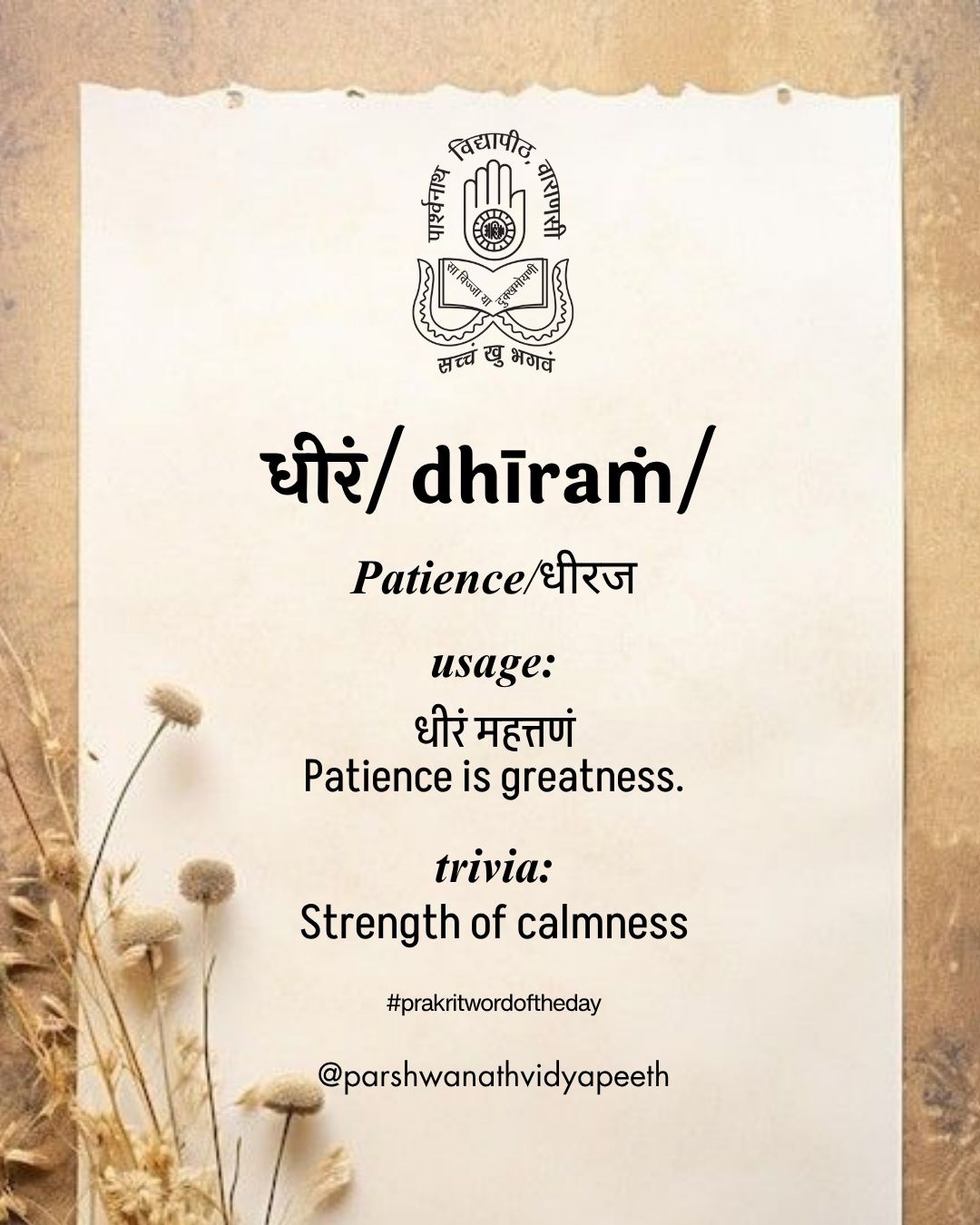
In Prakrit, “धीरं” (dhīraṁ) means patience, forbearance, and the strength to remain calm in the face of challenges. It is the ability to endure difficulties with composure, wisdom, and self-control.
The phrase “धीरं महताणं” reminds us that patience is a mark of true greatness. It reflects inner strength rather than weakness, enabling us to respond thoughtfully instead of reacting impulsively.
In Jain philosophy, धीरज is an essential virtue that supports self-discipline and spiritual progress. A patient mind is less disturbed by anger, fear, or attachment, making it easier to walk the path of non-violence and self-realization.
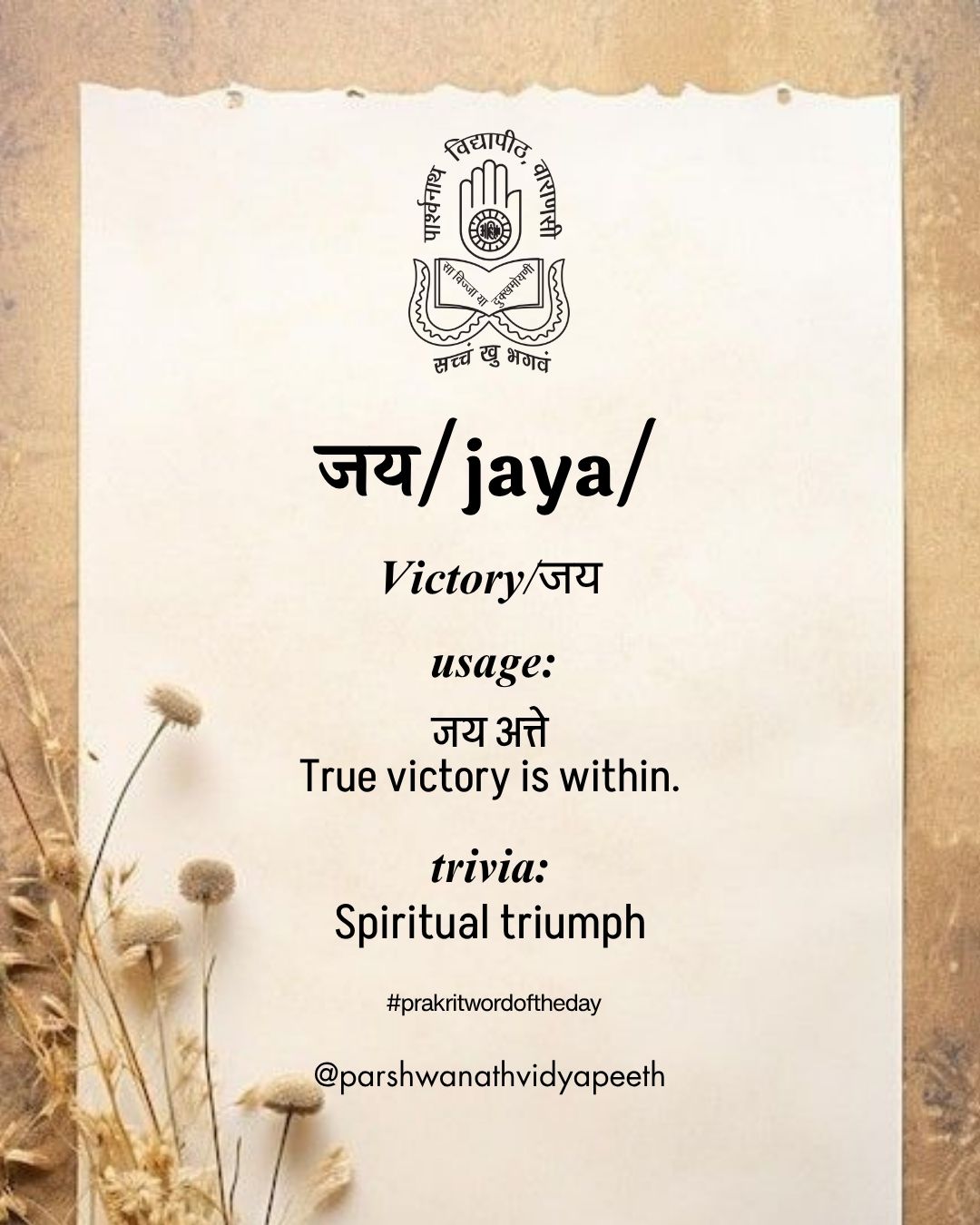
In Prakrit, “जय” (jaya) means victory, triumph, or conquest. In Jain philosophy, however, its deepest meaning is not the victory over others but the victory over oneself.
The phrase “जय अते” reminds us that the greatest triumph is achieved by conquering our own anger, pride, deceit, greed, and attachment. True success begins with self-mastery.
In Jain teachings, inner victory is considered far greater than worldly achievements. A person who overcomes negative emotions and cultivates wisdom, compassion, and self-restraint walks the path toward lasting peace and liberation.
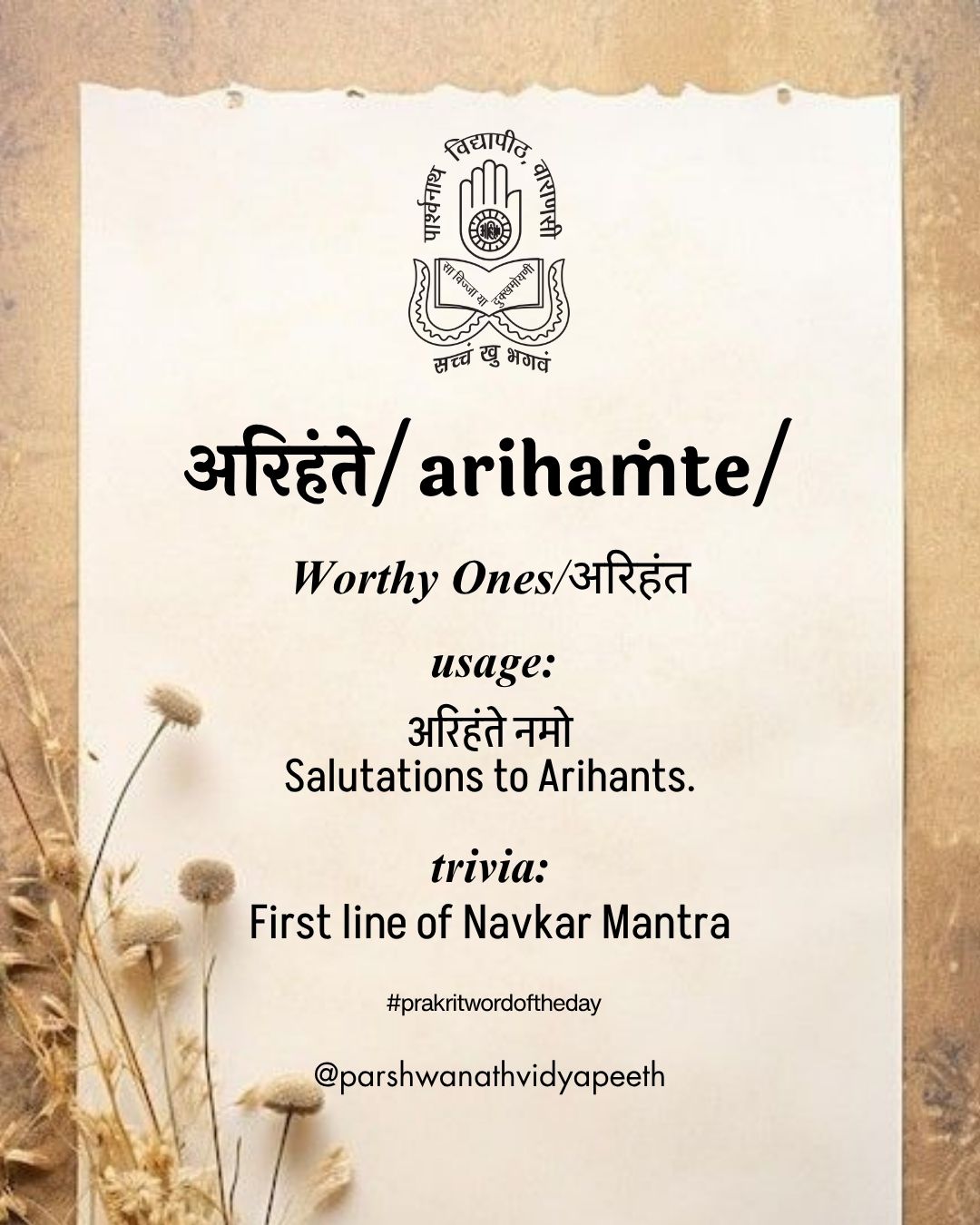
In Prakrit, “अरिहंते” (arihaṁte) refers to the Arihants—the Worthy Ones who have conquered their inner enemies such as anger, pride, deceit, and greed.
They have attained Kevala Jñāna (infinite knowledge) while still living and serve as enlightened guides for all beings.
The phrase “अरिहंते नमो” is the opening line of the sacred Navkar Mantra, the most revered prayer in Jainism. It expresses deep reverence toward the Arihants, not for worldly power, but for their perfect virtues and spiritual accomplishments.
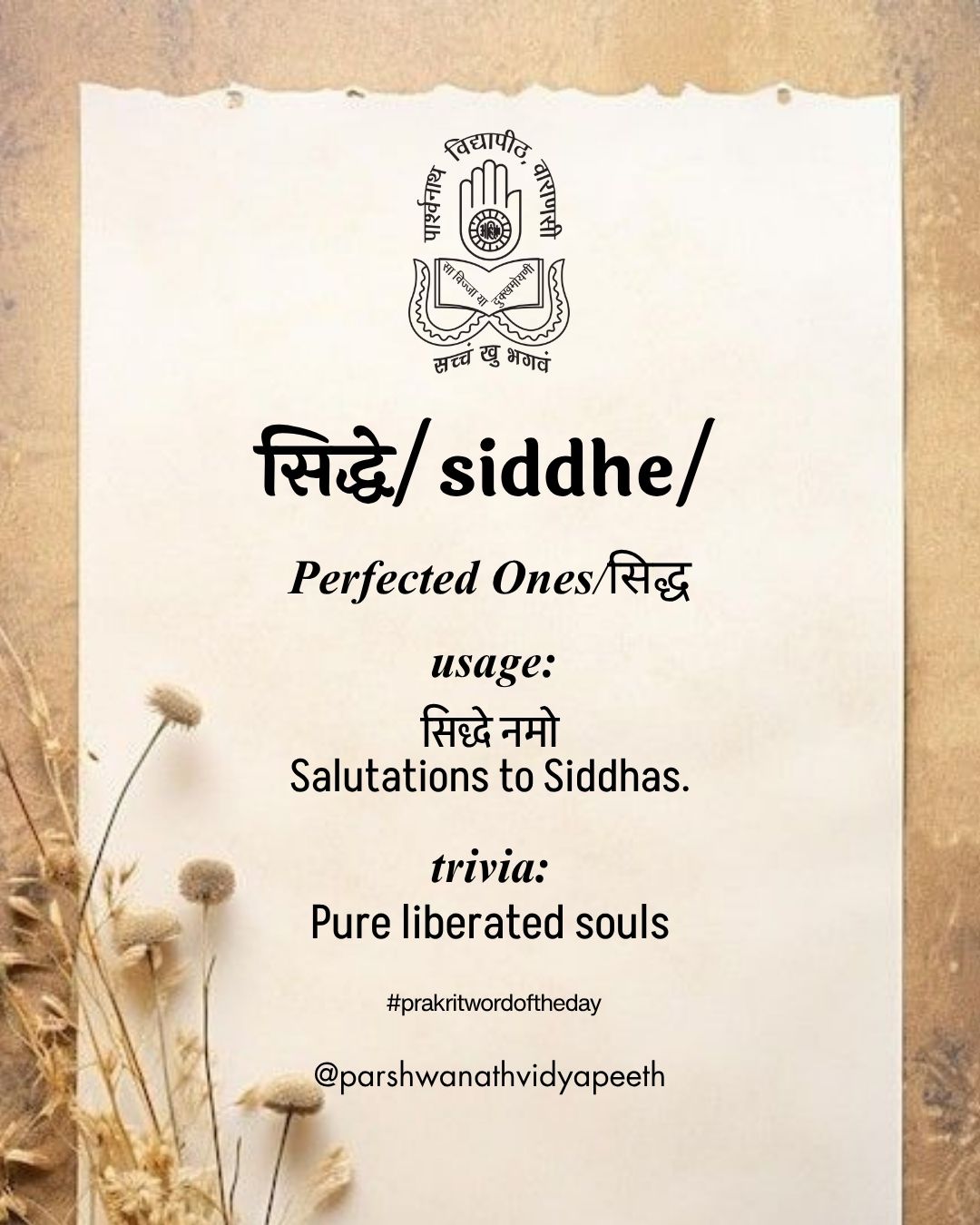
In Prakrit, “सिद्धे” (siddhe) refers to the Siddhas—the Perfected Ones who have attained complete liberation from the cycle of birth and death. Having destroyed all karmic bonds, they exist in a state of eternal bliss, infinite knowledge, infinite perception, and infinite energy.
The phrase “सिद्धे नमो” is the second line of the sacred Navkar Mantra. It is an expression of reverence toward the Siddhas, who have reached the highest spiritual state and serve as the ultimate ideal for every soul.
In Jain philosophy, Siddhas have no physical body, desires, or attachments. They reside eternally at the Siddha Śilā, the highest realm of the universe, beyond all worldly suffering and limitations.
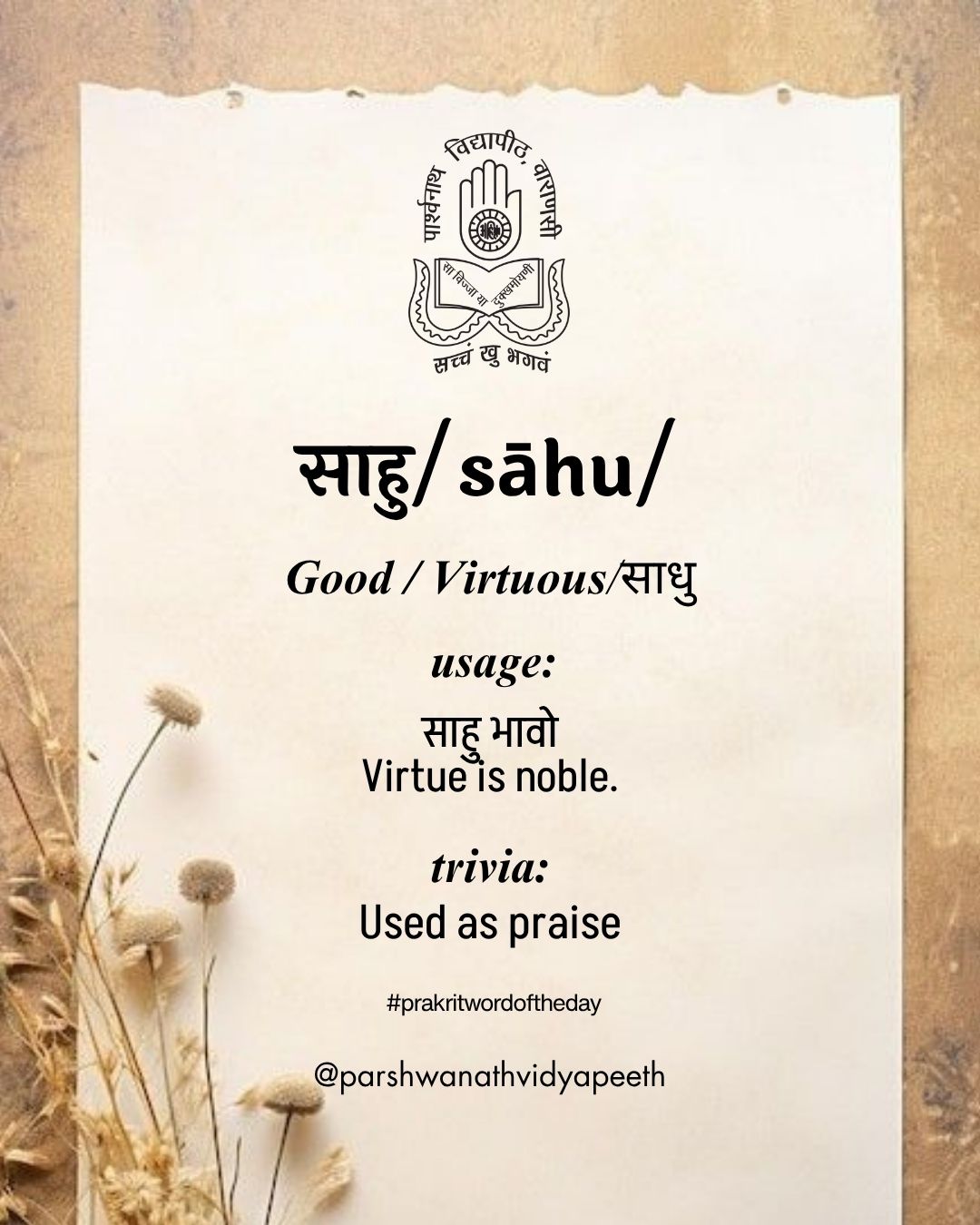
The phrase “साहु भावो” reminds us that true nobility lies in virtuous thoughts and actions. Goodness is not defined by status or wealth, but by integrity, kindness, humility, and self-restraint.
In Jain philosophy, साहु represents one who follows the path of righteousness through non-violence, truthfulness, self-discipline, and compassion. A virtuous life purifies the soul and leads one closer to spiritual awakening.
The word “साहु” has long been used as an expression of praise or approval, acknowledging actions that reflect wisdom, generosity, and ethical living. It encourages us to recognize and cultivate goodness in ourselves and others.
साहु teaches us that the greatest honor is not in being admired, but in living a life guided by virtue, compassion, and right conduct.
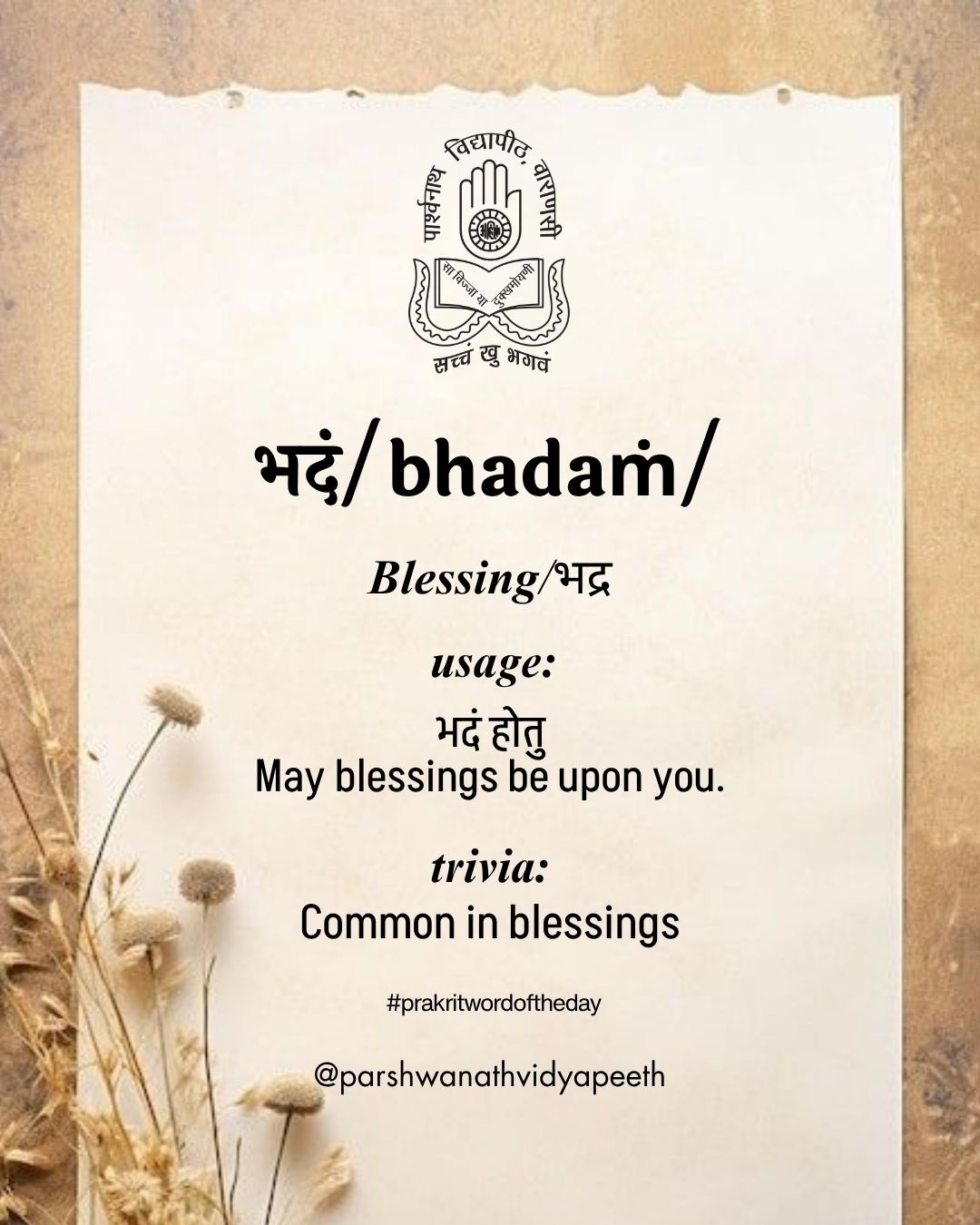
In Prakrit, “भदं” (bhadaṁ) means blessing, goodness, auspiciousness, and well-being. It is a word associated with noble wishes for happiness, peace, and prosperity. Derived from the Sanskrit भद्र (bhadra), it carries the sense of what is fortunate, virtuous, and beneficial.
The phrase “भदं होतु” is a heartfelt blessing that means, “May goodness and blessings be with you.” It reflects the timeless Indian tradition of wishing well-being, harmony, and success for others.
In Jain philosophy, true भद्र is not merely external good fortune but the inner blessings that arise from right faith, right knowledge, and right conduct. A life rooted in compassion, truth, and non-violence naturally becomes blessed.
About Us
The point of using dummy text for your paragraph is that it has a more-or-less normal distribution of letters. making it look like readable English.
Quick Links
Home
Prakrit Course
Shramana
Library
Contact Us
Address
Parshwnath VIdyapeeth, ITI Rd, Karaundi, Varanasi, Uttar Pradesh 221005