
Parshwanath Vidyapeeth
Jain Wisdom for Daily Life
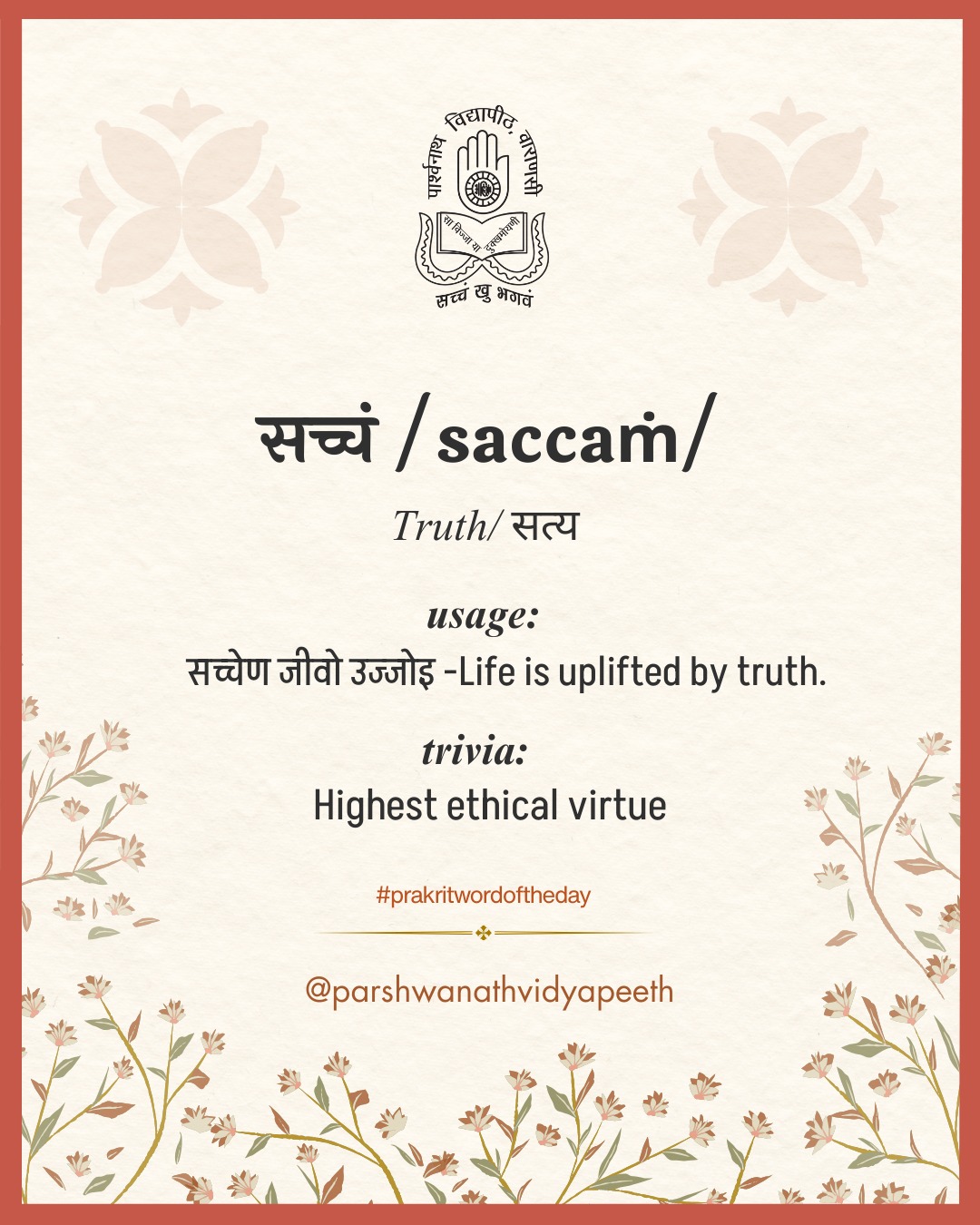
In Jain philosophy, truth is not merely a spoken virtue; it is a way of living.
“सच्चेण जीवो उज्जोइ” reminds us that when our thoughts, words, and actions are aligned with honesty, life is illumined with clarity, compassion, and inner strength.
May this timeless wisdom inspire us to walk the path of sincerity every day.
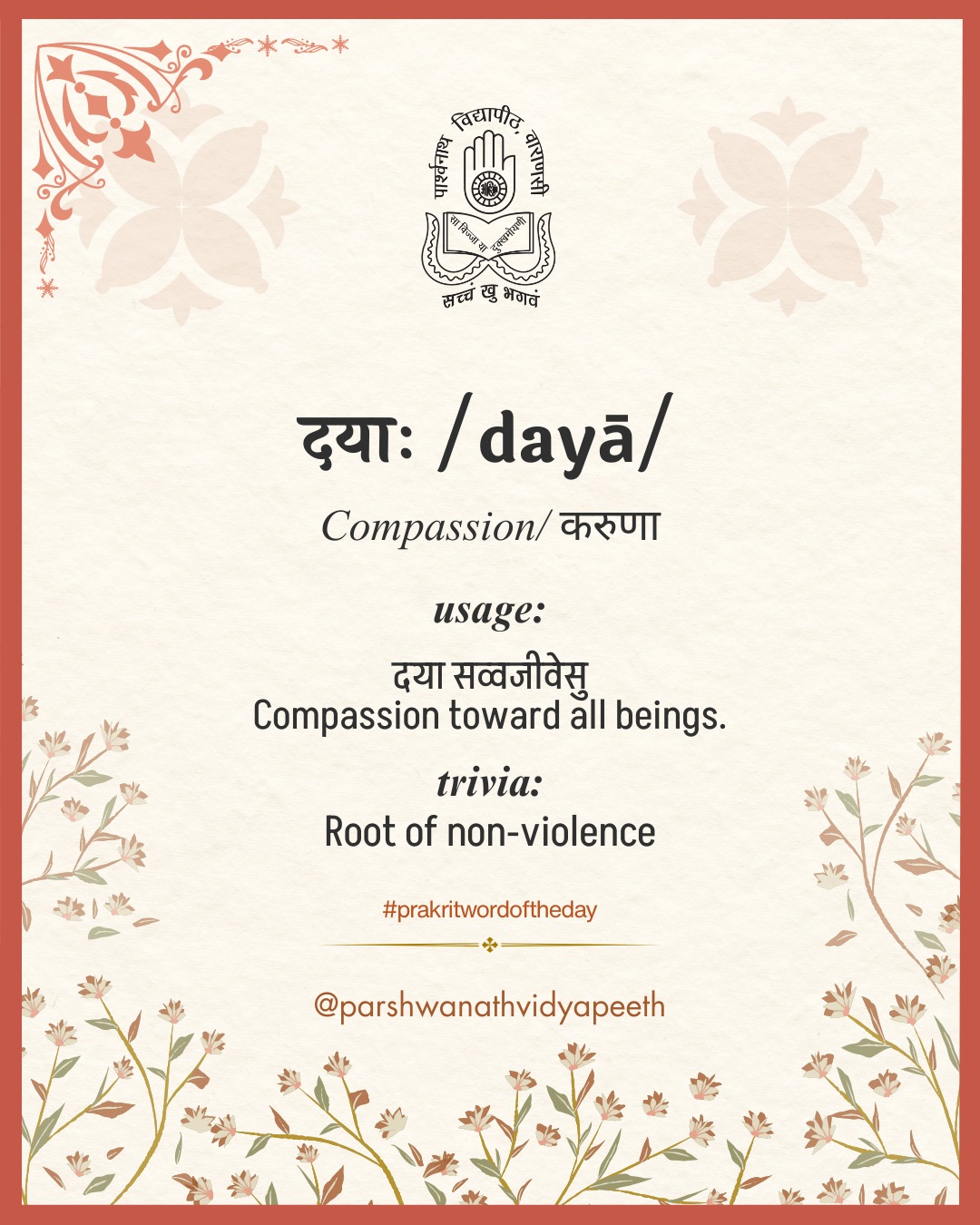
In Jain philosophy, compassion means recognizing the pain of others and responding with care, restraint, and empathy in thought, speech, and action.
When life is guided by दया, non-violence becomes natural, and harmony follows.
May this gentle virtue shape our conduct every day.
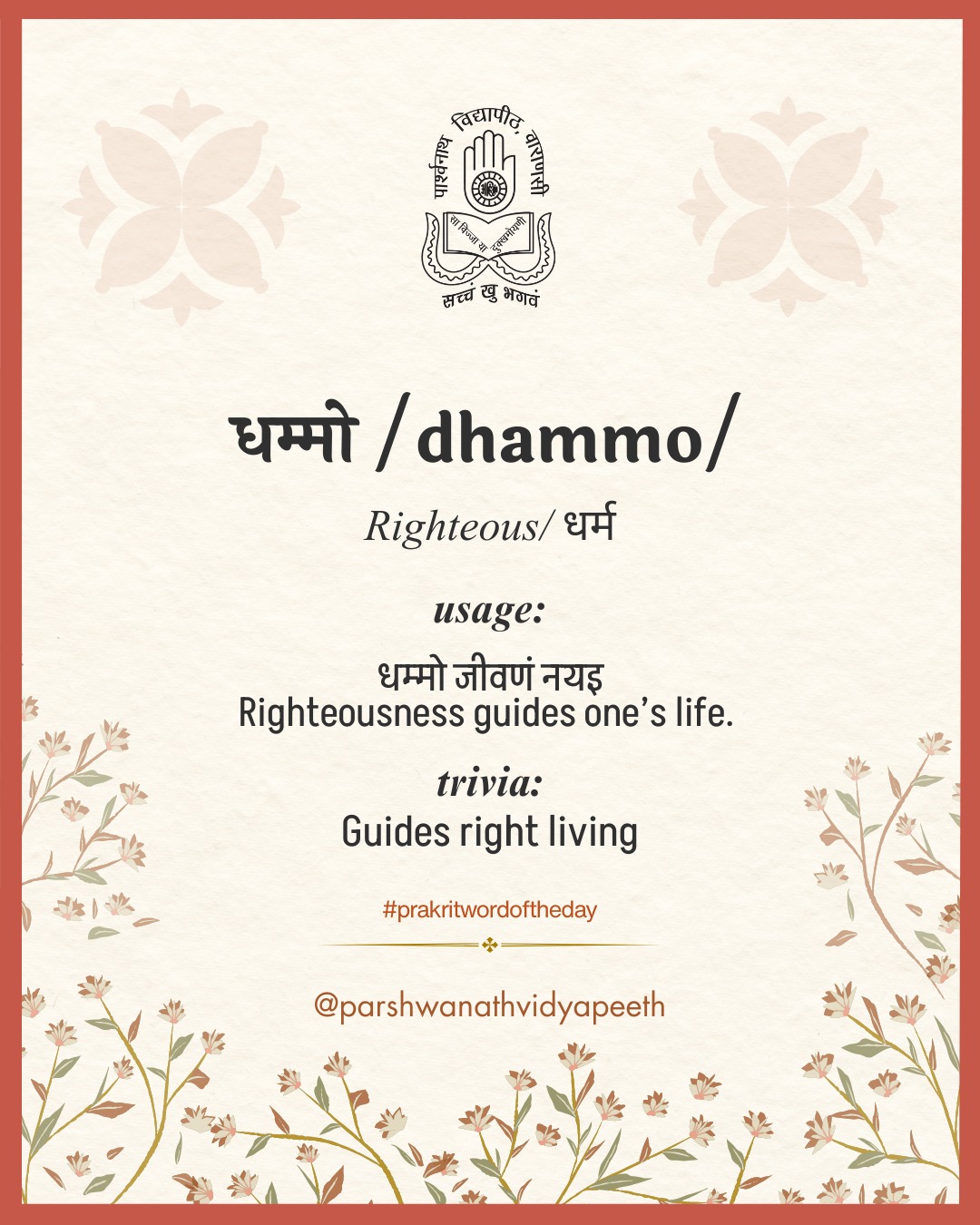
In Jain thought, धम्मो is not just belief, but conscious living—choosing what is right in thought, speech, and action.
“धम्मो जीवणं नयइ” reminds us that when life is rooted in righteousness, it naturally moves toward balance, discipline, and inner peace. May this ancient wisdom inspire us to walk the path of right conduct every day.
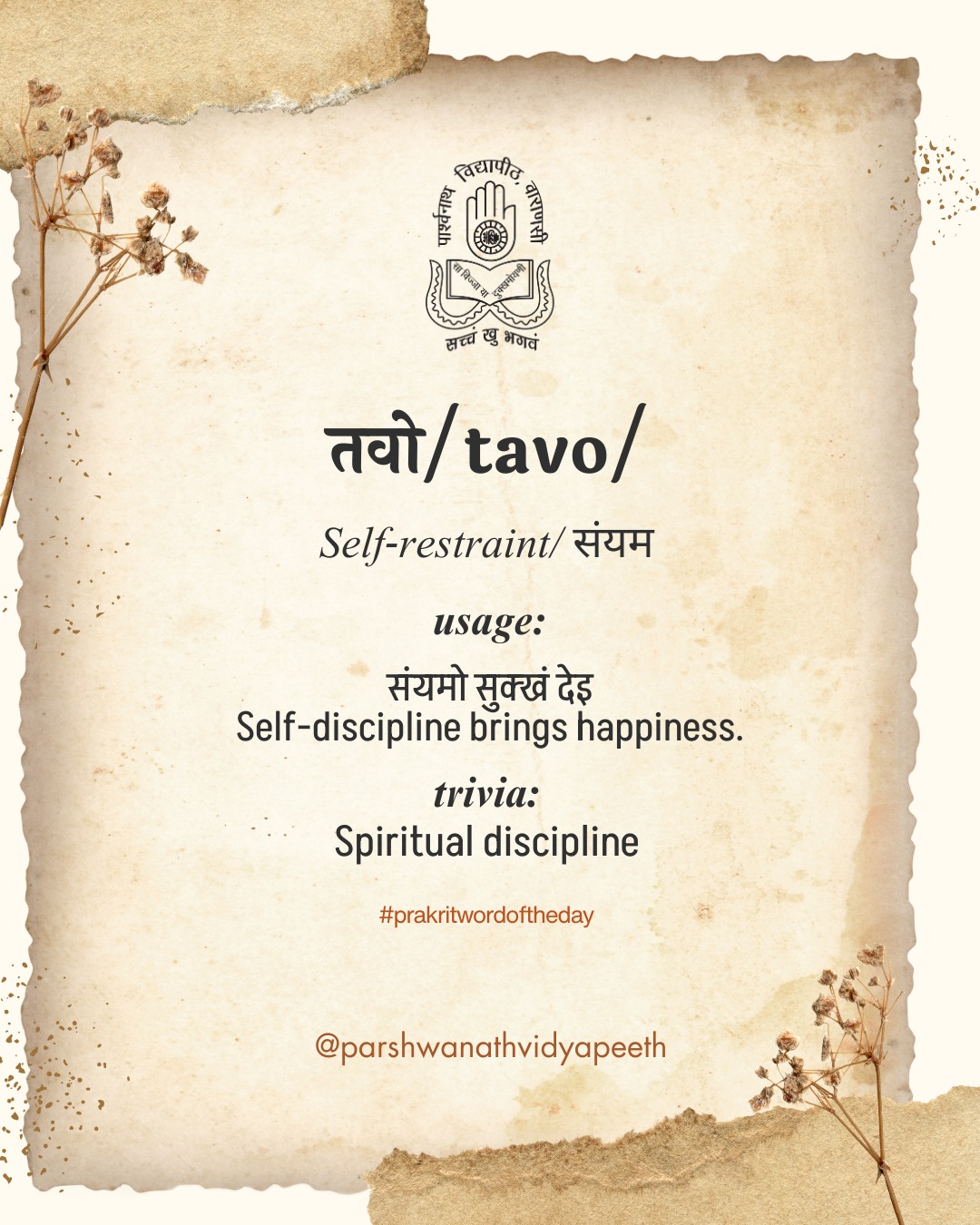
Tavo is the art of turning inward, choosing awareness over impulse, and harmony over excess.
The wisdom of “तवो सुखं देइ” whispers that true joy rises from inner steadiness, not outward indulgence.
May this gentle discipline help us create a life of clarity, balance, and quiet joy.
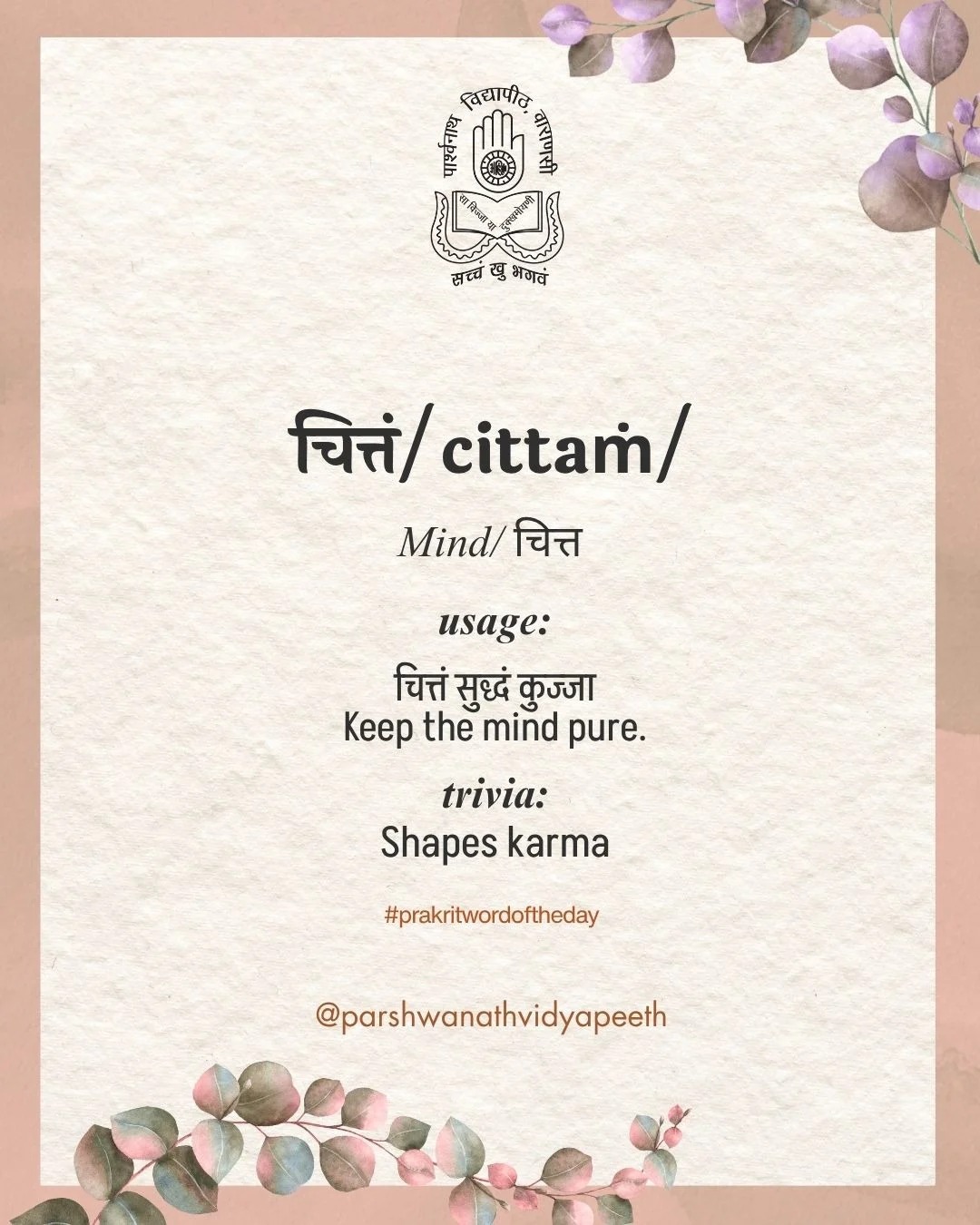
Trivia: In Jain and Prakrit philosophy, चित्तं (cittam) refers to the inner consciousness—the seat of thoughts, emotions, and intentions. It plays a vital role in shaping one’s karma, as every action originates from the state of the mind. A pure mind leads to right perception, right knowledge, and ultimately, right conduct.
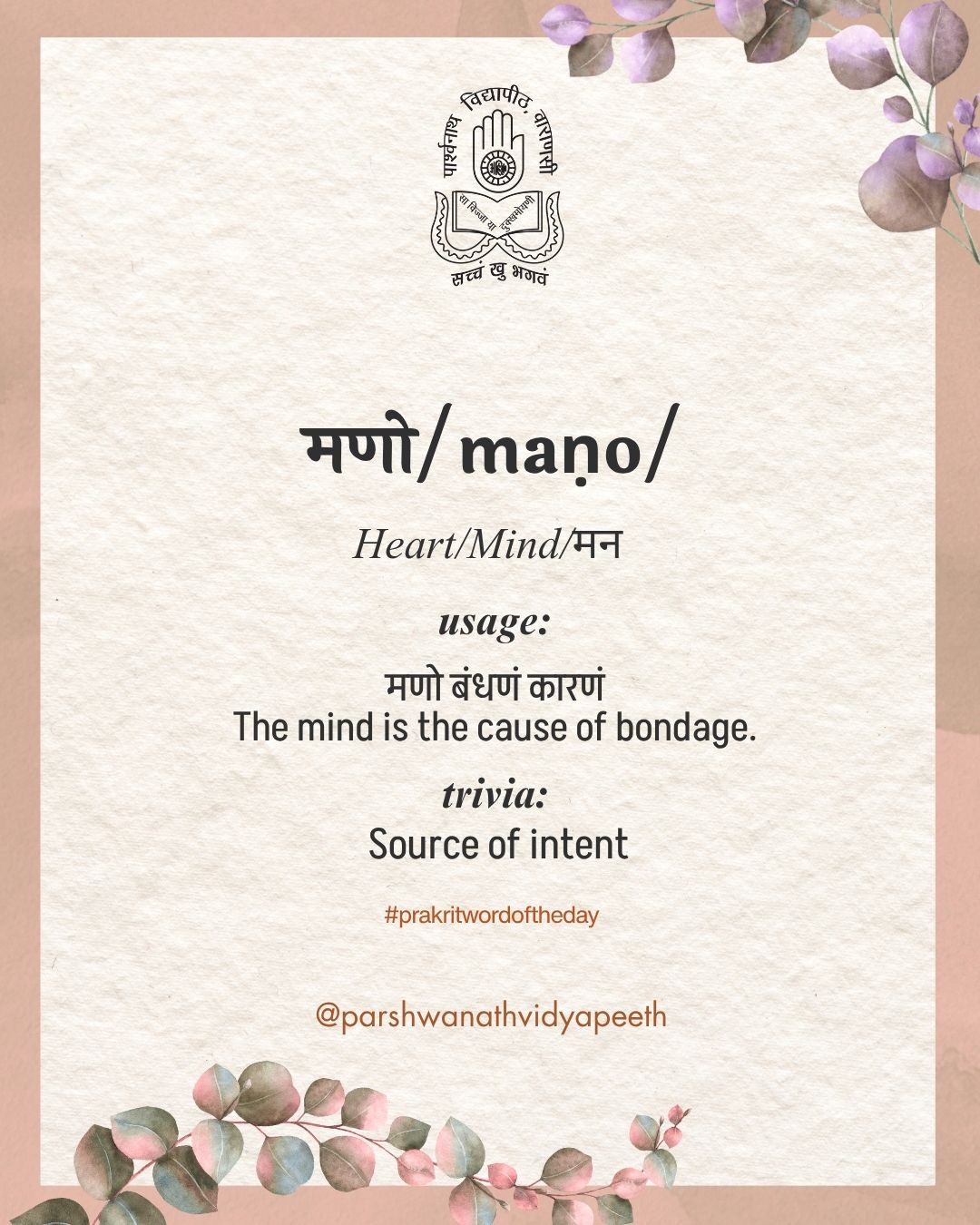
In Jain and Prakrit philosophy, मणो (maṇo) signifies both the heart and the mind—the inner space where intentions, desires, and thoughts originate. It is considered the root of all actions, as every कर्म (karma) begins with a thought formed within the mind.When the mind is clouded by attachment, anger, ego, or desires, it becomes the कारण (cause) of bondage, tying the soul to cycles of suffering. However, when the mind is disciplined, aware, and pure, it becomes the very path to liberation. Thus, the same mind that binds can also free.
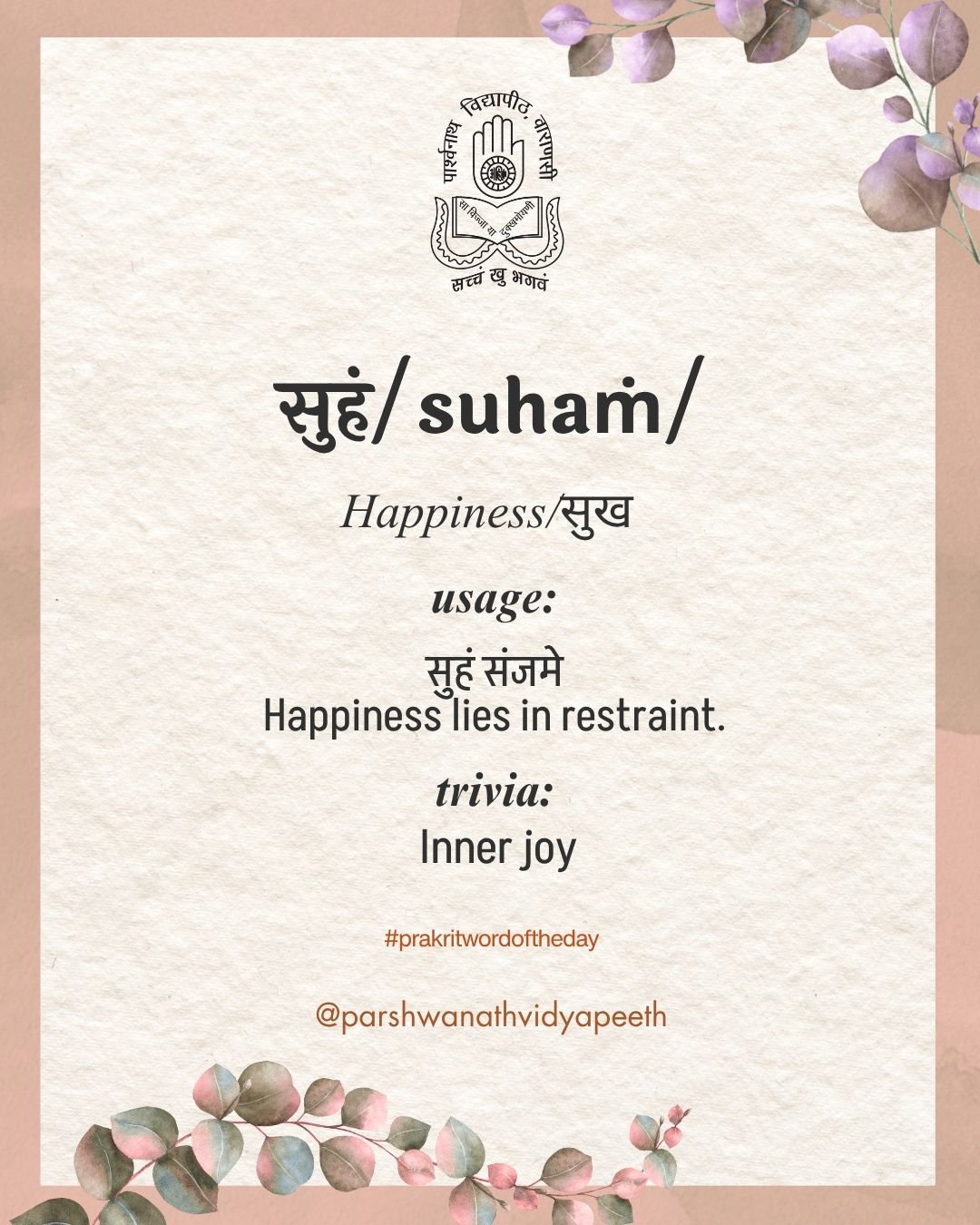
In Jain and Prakrit philosophy, suhaṁ (सुहं) represents not just external pleasure, but a deeper, inner joy that arises from self-discipline and balance. True happiness is not found in excess, but in संयम (restraint), where desires are understood and gently guided. Real happiness is शांत (calm), स्थिर (steady), and भीतर से उत्पन्न (born within). It is not dependent on circumstances, but on the state of the mind and soul. Through restraint, one cultivates clarity, peace, and lasting contentment.
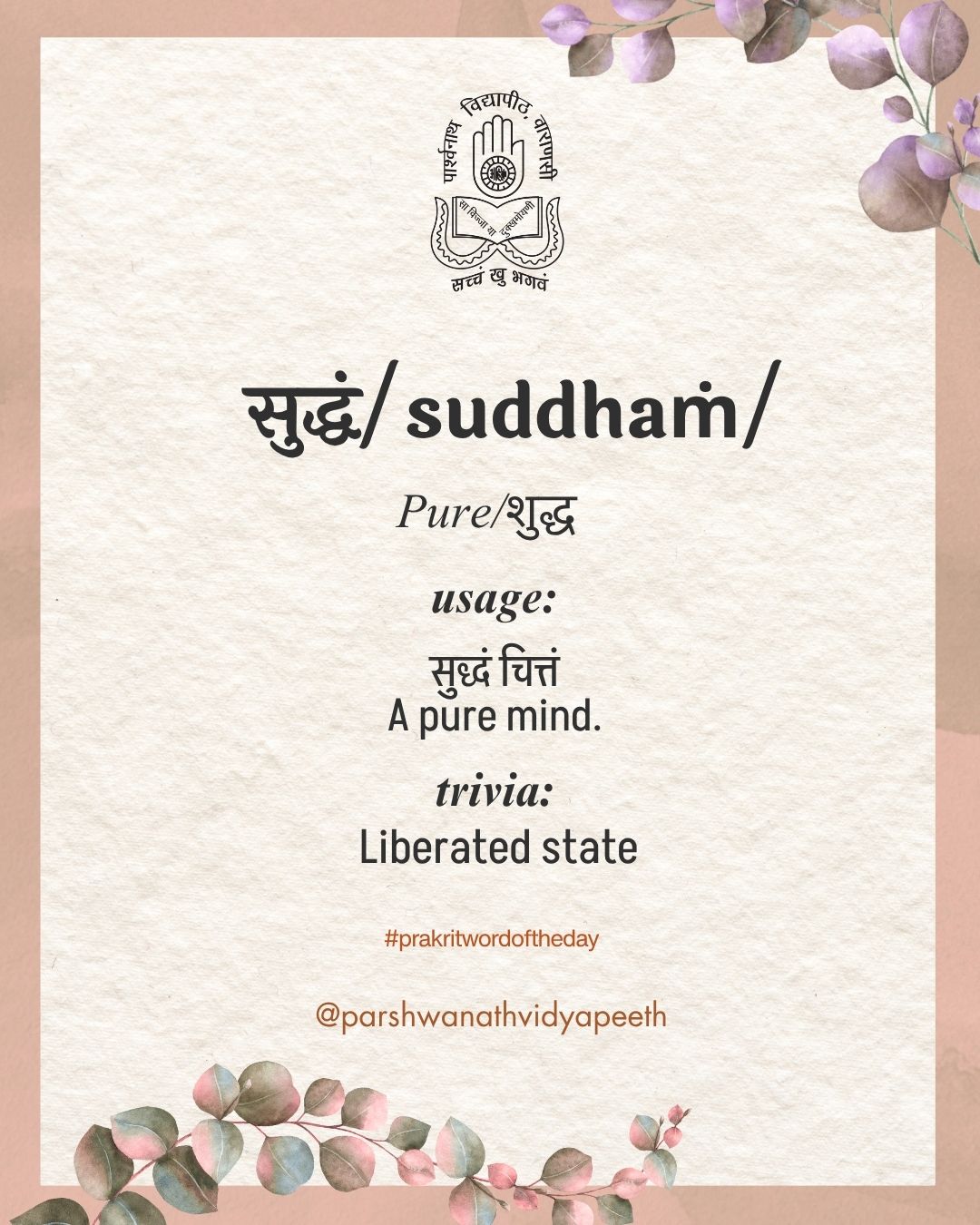
In Prakrit and Jain philosophy, “suddham” (सुद्धं) goes beyond external cleanliness—it reflects inner purity of thoughts, intentions, and consciousness. A truly pure state is one where the mind is free from negativity, अहंकार (ego), and विकार (impurities).सुद्धं (suddham) = Pure / Inner Clarity
True purity is निर्मल (clean), शांत (calm), and निष्कपट (genuine). It is cultivated through self-awareness, right thinking, and disciplined living. A pure mind naturally leads to peaceful actions and a balanced life.